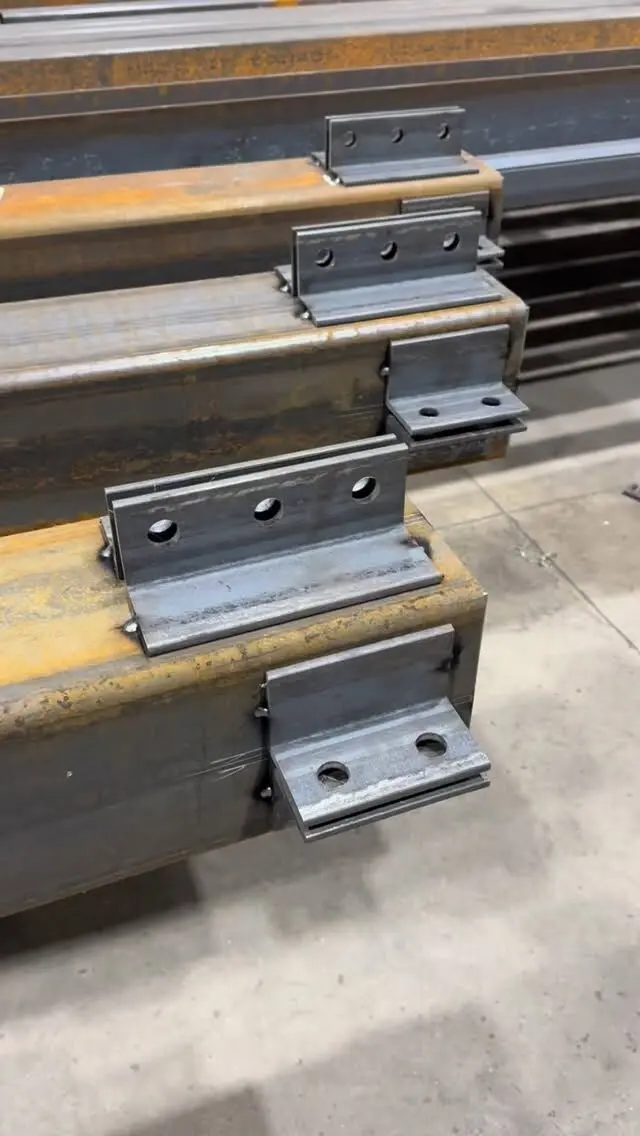
A steel column splice joins one length of column to the next, end to end. The most common Canadian details are bolted flange plate splices (with filler plates where the column size changes), butt plate splices where the depth changes, and welded splices made with groove welds. Splices usually sit a short distance above a floor, where ironworkers can reach them, and they're designed for compression, any tension or bending at the joint, and the stability of the column during erection.
This guide covers why columns are spliced, the main splice types, where they go and what the fabricator needs on the drawings.
Why columns are spliced
A multi-storey building rarely uses one column length from the foundation to the roof. Splices are needed because:
- Shipping and handling. Very long pieces are hard to transport, lift and stand up safely. Our post on standard steel beam lengths and delivery limits explains the practical limits.
- Erection sequence. Columns are usually erected in tiers, often two or three storeys at a time, with the floor framing installed before the next tier goes up.
- Changing loads. Columns carry less load higher in the building, so the designer can switch to a lighter section above a splice, saving steel.
- Mill lengths. Very long or heavy sections may not be available in one piece.
In most houses and small buildings, none of this applies: a basement post or a one-storey column is made in one piece to length. Splices are a feature of taller frames.
Bolted flange plate splices
The most common column splice in bolted construction is the flange plate splice:
- Flange plates are bolted (or shop welded to the lower column and field bolted to the upper column) across the joint on the outside of each flange.
- Web plates are added where the splice has to carry shear or where the designer wants them for stability.
- Filler plates (packs) make up the difference when the upper column has thinner flanges or a slightly smaller depth than the lower one. Thick fillers can reduce bolt capacity, so the designer accounts for them.
Flange plate splices are quick to erect: the upper column is lowered onto the lower one, the plates guide it into place, and the bolts go in from a working position at the floor.
Butt plate splices for a change in depth
When the upper column is noticeably shallower than the lower one, for example a W250 sitting on a W310, flange plates can't line up with both. A butt plate splice solves this:
- A horizontal plate is welded to the top of the lower column, or the bottom of the upper column, or both.
- The two plates (or one plate and the other column's end) are bolted together.
- Where the upper column's flanges don't sit over the lower column's flanges, the plate has to spread the load, and stiffeners may be added under it.
Butt plates are also common where a column changes from a W-shape to HSS, or the reverse.
Welded column splices
Welded splices are used where the design needs a full-strength joint, where bolted plates would clash with finishes or other members, or by preference of the erector. Typical features:
- Partial joint penetration (PJP) groove welds are common for splices that mainly carry compression, with the column ends finished to bear.
- Complete joint penetration (CJP) groove welds are used where the splice has to develop the full strength of the section, for example in some moment frames or where significant tension or bending occurs.
- Erection plates or lugs are bolted across the joint so the upper column is held plumb and stable while it's welded.
Field welding takes longer and depends on weather, access and inspection. Companies welding structural steel designed to CSA S16 must be certified by the Canadian Welding Bureau, for field welds as well as shop welds. See why hire a CWB certified fabricator.
HSS column splices
Hollow structural section (HSS) columns are spliced differently because there's no open web to bolt through:
- Cap and base plate (end plate) splice. Plates welded to the column ends are bolted together, with the bolts outside the tube. Simple and common for HSS.
- Welded splice with a backing bar or ring. The tube ends are bevelled and groove welded around the perimeter, with backing inside so the weld can be made from outside.
- Side plates. Plates welded to opposite faces of the tube, bolted on site, for smaller or lightly loaded columns.
Size changes in HSS columns are often handled with a butt plate between the two tubes. Our guide to HSS connections and framing details covers related details.
Where splices go and what they carry
Location. Splices are usually placed a short distance above a floor level. That puts the joint at a comfortable working height for bolting or welding from the floor deck, keeps it clear of the beam connections at the floor, and puts it near the point in the column where bending is often low. The exact height comes from the design and erection drawings and is checked on the shop drawings; see how to review steel shop drawings.
Forces. A column splice may have to carry:
- Axial compression, which is the main load in most columns. Where the column ends are finished (milled) to bear on each other, much of the compression can pass by direct bearing, and CSA S16 has specific rules for how the splice must be detailed and proportioned in that case.
- Tension, from uplift, wind or seismic loads, or simply during erection.
- Bending and shear, from frame action, eccentric loads or lateral loads.
- Erection loads, because a newly placed column tier has to stand up safely before the floor framing and bracing are complete.
The designer sets the splice forces. The fabricator then details the splice to suit, or designs it where that responsibility has been delegated. Seismic requirements can add further rules for splices in some frames.
Finishing column ends to bear
For splices that rely on bearing, the column ends are cut square and may be milled flat so the two pieces sit in full contact. That needs:
- Accurate cutting so the column stays plumb when stacked.
- Shims only where the design allows them, to correct small gaps.
- Inspection of the fit-up before the splice is bolted or welded.
A column that leans because of a poorly finished end throws the whole tier out of plumb, which is why splice fit-up is one of the things erectors check first. The steel erection process explains how columns are plumbed and connected.
A note on house posts
Homeowners sometimes ask about extending a steel post by welding a piece on, or joining two shorter posts. Don't. A post is a column; joining it changes its capacity and straightness, and a poor weld can fail under load. If a post is too short, it should be replaced with one made to the right length, with proper cap and base plates. Our guide to installing steel columns and posts covers how posts are measured and set.
Getting columns and splices fabricated
We fabricate columns with their splice plates, butt plates, cap and base plates and erection lugs to your shop drawings, in our CWB certified shop, with shop drawings prepared in-house. We deliver across the GTA and Ontario, and we supply and install structural steel from basement posts to larger commercial frames.
Send your drawings for a quote, or see the services we offer.
Frequently asked questions
What is a steel column splice?
A column splice is the joint where one length of column is connected to the next, end to end, to make a column taller than can be shipped or erected in one piece, or to change to a lighter section higher up the building.
Where are steel column splices located?
Usually a short distance above a floor level, at a height where ironworkers can reach the joint from the floor, and often every two or three storeys. The exact location is set on the design and erection drawings.
Can a steel column be spliced by welding?
Yes. Welded splices use partial or complete joint penetration groove welds, often with bolted erection plates to hold the column while it is welded. Field welding must be done by a CWB certified company to CSA W59.
How do you splice columns of different sizes?
When the upper and lower columns have different depths or flange thicknesses, the splice uses filler plates to make up the difference, or a horizontal butt plate between the two column ends. The designer decides which detail suits the forces and the size change.
Can I splice a steel post in my basement?
Not without engineering. A house post is normally made in one piece to the exact length. Welding an extension onto a post changes its strength and straightness, so any joint in a structural post needs to be designed and made by a certified shop.