ACI vs CSA Rebar Detailing: What Changes in Canada
How US rebar detailing to ACI 318 and CRSI differs from Canadian practice under CSA A23.1, A23.3 and RSIC: bar sizes, grades, hooks, bend diameters, cover and laps.
How US rebar detailing to ACI 318 and CRSI differs from Canadian practice under CSA A23.1, A23.3 and RSIC: bar sizes, grades, hooks, bend diameters, cover and laps.
How base plate layouts and anchor bolt plans are drawn, what a base plate template is, how it holds anchor bolts for the pour, and how to check them.
Can you bend C-channel or steel plate? How channel and plate are bent and rolled, easy way vs hard way, minimum radius, DIY limits and what to send a shop.
How rebar is bent into circles, arches and spirals: shop radius bending vs curving in the field, length formulas, spiral rules and fibreglass hoops.
How rebar stirrups are made, the tools used to bend them on site, the bending rules that apply, and when shop-fabricated stirrups beat bending your own.
When to use straight, L-shaped, hooked, U-shaped, cranked or threaded rebar dowels, why shallow pours need bent dowels, and how to order them correctly.
Can steel beams be bolted or welded together? How beam connections and splices work, bolted vs welded compared, extending a beam, and who designs the joint.
Can rebar be bent or cut on site? What is practical for 10M, 15M and larger bars, the right tools, limits on embedded and coated bar, and when to use the shop.
Bending and cutting epoxy-coated rebar: A775 vs A934 bar, larger bend diameters, why field bending is avoided, no torch cutting, and how cut ends are patched.
Whether galvanized and epoxy-coated rebar can be welded, what a rebar welding detail must show, coating removal and repair, fumes, and why couplers often win.
Who makes rebar in Canada, how fabricators differ from mills and supply yards, and the questions to ask an Ontario rebar fabrication shop before you award the job.
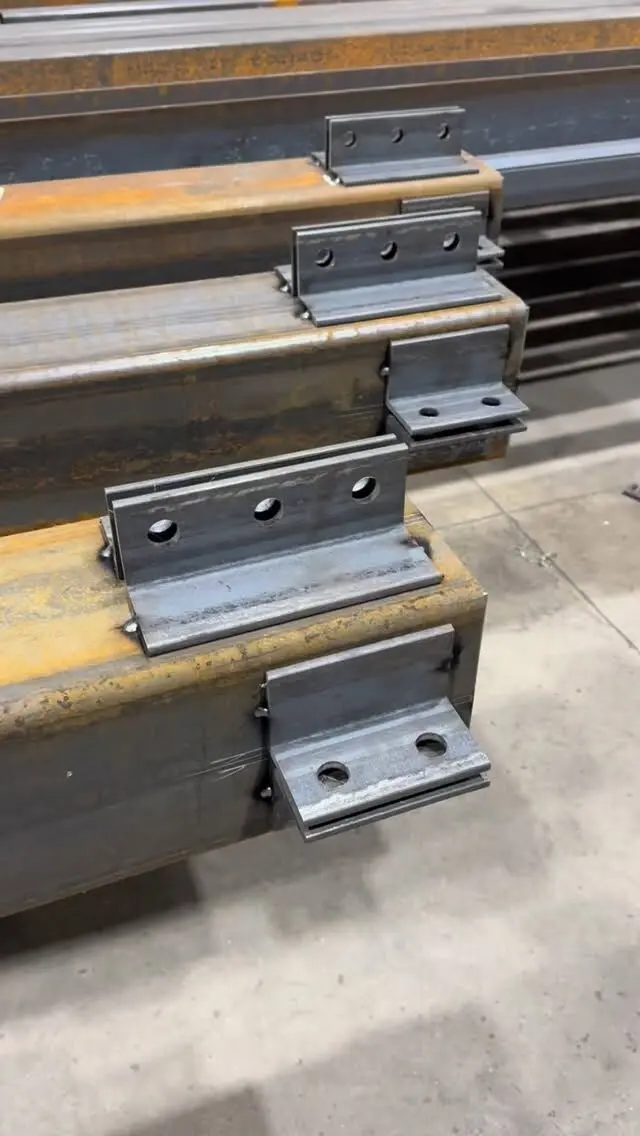
What steel angle cleats are, the types of clip, seat and ledger angles used in steel structures, angle-to-angle connections, and what to show on drawings.
What rebar U-bars, hairpins, Z-bars, J-hooks, L-bars and standees are, where each shape is used in footings, walls and slabs, and how to order them right.
What CSA W59, Canada's structural welding code, covers, how it links to CSA S16, W47.1 and the building code, the current edition, and AWS D1.1.
How to order custom rebar stirrups and ties: shapes, sizing, 90° and 135° hooks, what to put on the order, what drives the price and how to handle them on site.
What goes into CWB certification cost for a company and a CWB welding test for a welder: fees, supervisors, engineers, procedures, test plates and renewals.
How CWB and AWS welding certification differ, whether an AWS cert counts in Canada or a CWB ticket in the US, and how CSA W59 and AWS D1.1 relate.
When steel and rebar shop drawings need a P.Eng seal in Ontario, how a seal differs from a review stamp, and who can prepare shop drawings.
Free quotations
Email your structural or rebar drawings and we'll come back with a detailed quote.