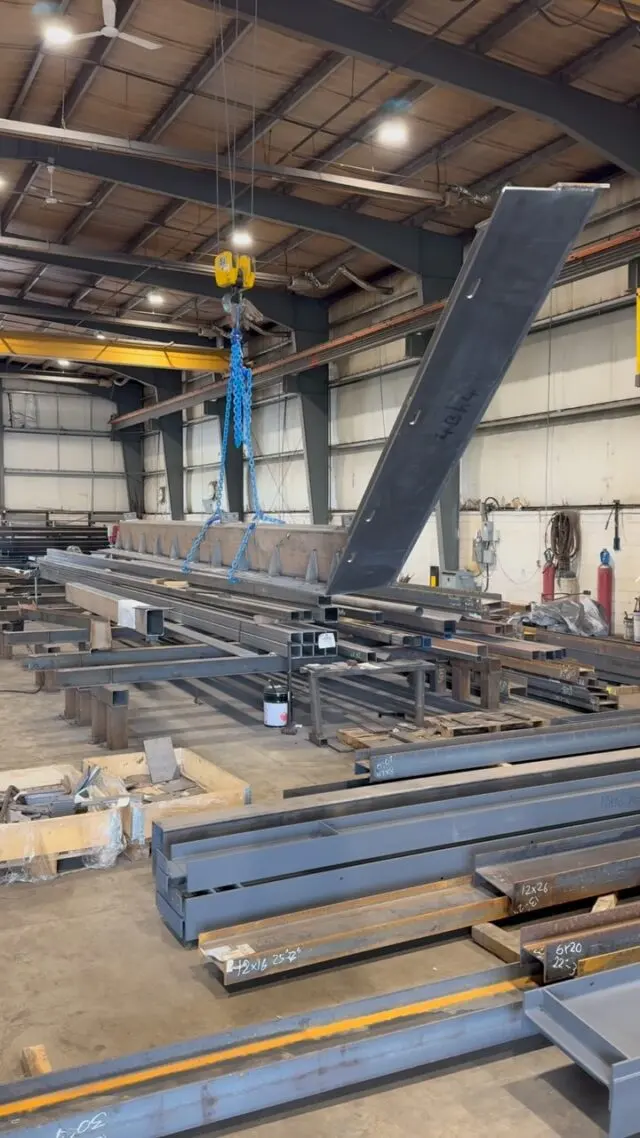
A CWB-certified shop has been certified by the Canadian Welding Bureau to a CSA welding standard, usually CSA W47.1 for fusion welding of steel. That means its welding procedures are approved, its welders are tested, it has qualified welding supervisors (and, in Divisions 1 and 2, a registered professional engineer responsible for welding), and it is audited. For structural steel designed to CSA S16, which the Ontario Building Code references, certification of the fabricators and erectors doing the welding is a requirement, not just a nice-to-have.
What CWB certification actually covers
The CWB Group certifies companies, not just individual welders. For CSA W47.1, a company has to:
- Qualify its welding personnel in charge. Welding supervisors need at least five years of welding-related experience and must pass written exams covering welding symbols, weld faults, quality control and inspection, and the CSA W47.1 and W59 standards. Division 1 and 2 companies also designate a welding engineer.
- Submit its welding procedures to the CWB Group for acceptance. These spell out processes, consumables, joint details and parameters for the welds the shop makes. Some procedures require qualification testing.
- Test its welders and operators for the processes and positions they'll actually weld in.
- Pass an audit by a CWB Group representative before certification is issued.
The welding itself follows CSA W59, the Canadian standard for welded steel construction, which covers weld design, workmanship and inspection requirements. W47.1 is about the company's ability to meet W59; W59 is about the welds.
Company certification vs a welder's "ticket"
People often use "CWB certified" for two different things:
- A welder's qualification, often called a ticket, shows that an individual passed a test for a particular process and position, such as flux-cored welding in the vertical position.
- Company certification to CSA W47.1 covers the whole operation: the procedures, the supervision, the engineering responsibility (in Divisions 1 and 2), the audits and the qualification of every welder the company employs.
A shop full of experienced welders is not a certified shop unless the company itself holds certification. Going the other way, a certified company still has to make sure each welder is qualified for the process and position of the welds in front of them. When a specification says "CWB certified fabricator", it means company certification. Ask for that, and treat individual tickets as part of the picture rather than a substitute.
The three divisions of CSA W47.1
Companies are certified in one of three divisions, depending on the engineering resources they have for welding:
| Division | Professional engineer responsible for welding | Welding supervisor |
|---|---|---|
| Division 1 | Employed full-time | Required |
| Division 2 | Retained part-time | Required |
| Division 3 | Not required | Required |
A higher division doesn't automatically mean better welds, but it does mean an engineer is formally responsible for the company's welding. That matters most for structural work, where weld procedures and repairs sometimes need engineering judgment.
Is CWB certification required in Ontario?
The chain works like this:
- The Ontario Building Code references CSA S16 for the design of structural steel.
- CSA S16 requires that fabricators and erectors responsible for welding structures under the standard be certified by the CWB to CSA W47.1 (Division 1 or Division 2), CSA W55.3 (resistance welding), or both, as applicable.
- Part of the work may be sublet to a Division 3 company, but the Division 1 or 2 company keeps responsibility for it.
In practice, structural engineers routinely write CWB certification into their specifications, and building officials and inspectors expect it. Certification also has to be in place before the work starts. A British Columbia Building Code Appeal Board decision found an erection contractor non-compliant because its CWB certification wasn't complete when construction began, even though most of the requirements had been met.
The exact clause numbers and wording vary between editions of CSA S16, and smaller residential jobs may be handled differently by the designer and the building department. If you're not sure what your project needs, ask your engineer or building official. The safe default for any welded structural steel is a certified shop.
What certification does for you
Certification isn't just paperwork. For the person buying the steel, it means:
- Tested welders. The person welding your beam connections has passed a test for that process and position.
- Approved procedures. Welds are made to documented procedures reviewed by the CWB Group, not improvised.
- Supervision. A qualified welding supervisor is responsible for the work on the floor.
- Accountability. Audits and requalification keep the system working after the certificate is issued.
- Fewer problems at inspection. Engineers and inspectors are used to working with certified shops, and documentation is easier to produce.
- Less rework on site. Consistent shop welds mean pieces fit and connections don't get cut out and redone.
None of this replaces design review or inspection. It is the baseline that makes the rest of the quality process work.
CWB vs AWS: does US certification count?
You may see AWS (American Welding Society) qualifications mentioned by US suppliers. AWS D1.1 is the main US structural welding code, and US fabricators are often audited under AISC's certification program. Those are respected systems, but they are not the same as CWB certification to CSA W47.1, and a Canadian project designed to CSA S16 normally calls for the Canadian standard. If you're considering steel fabricated outside Canada for a Canadian job, check with the engineer of record before you order.
Other CWB certifications you might hear about
The CWB Group certifies companies to several standards. The ones most relevant to building projects:
- CSA W47.1: fusion welding of steel. The main one for structural and miscellaneous steel.
- CSA W47.2: fusion welding of aluminum.
- CSA W55.3: resistance welding, a different family of processes from arc welding.
- CSA W186: welding of reinforcing bars in reinforced concrete construction. Relevant if your project calls for welded rebar.
Make sure the certification matches the work. A shop certified for aluminum isn't automatically certified for structural steel, and welding rebar has its own standard.
How to check a fabricator's certification
- Ask which standard and division the company is certified to, and whether that covers both shop and field welding if they also install.
- Search the CWB Group's certified company directory on the CWB website to confirm.
- If an erector is separate, check their certification too, since field welds are covered by the same requirement.
- Ask who the welding supervisor is and how the shop handles weld inspection and repairs.
It takes a few minutes and avoids a stop-work conversation later. For the rest of the vetting process, such as shop drawings, capacity, delivery and comparing quotes, see our guide on how to choose a structural steel fabricator in Ontario.
CWB-certified welding at Procut Steel
Our shop welding is certified by the Canadian Welding Bureau. Every structural piece we fabricate, from beams and columns with welded plates to custom stairs, railings and plates cut and drilled to your details, is welded in the shop and marked to match the drawings so installation goes smoothly. If your project specifies a particular CSA W47.1 division or needs certification documents for submittals, ask us when you request a quote and we'll confirm what we can provide.
Request a quote with your drawings, or see our fabrication services.
Frequently asked questions
What is CWB certification?
It is company certification issued by the Canadian Welding Bureau (CWB Group) to a CSA welding standard, most often CSA W47.1 for fusion welding of steel. The company's welding engineer, supervisors, procedures and welders are all qualified and the shop is audited.
Is CWB certification required?
For structural steel designed to CSA S16, yes: S16 requires fabricators and erectors who weld structures under it to be CWB certified to CSA W47.1 (Division 1 or 2), CSA W55.3, or both, as applicable. The Ontario Building Code references CSA S16 for structural steel. Confirm what applies to your project with your engineer.
What are the CWB divisions?
Division 1 companies employ a full-time registered professional engineer responsible for welding, Division 2 companies retain one part-time, and Division 3 companies are not required to have one. All three need qualified welding supervisors.
How can I check if a shop is CWB certified?
Use the certified company search on the CWB Group website, and ask the shop which standard and division it is certified to.