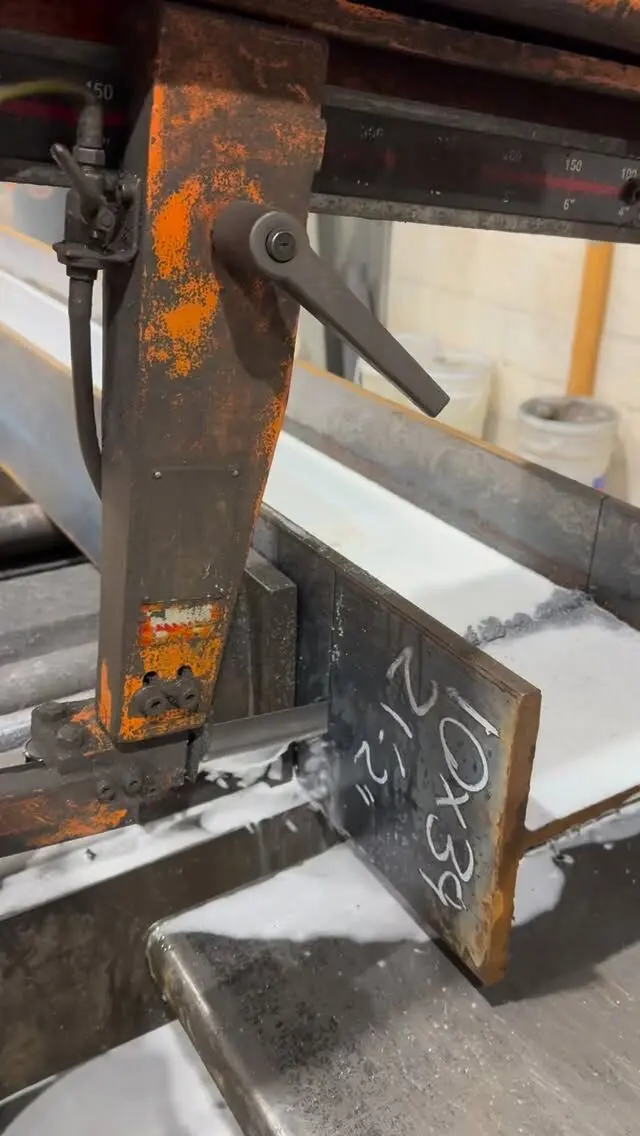
There is no standard C-channel size for a trailer frame: the right channel depends on the trailer's gross weight rating, frame length, axle position and tongue design, so the size should come from proven plans, the trailer maker or an engineer. What a steel supplier can do is cut, cope, drill and weld the channel accurately and give it a finish that lasts. This guide explains what drives the size, how channel compares with tube, and how a channel frame is fabricated.
What sets the channel size on a trailer frame
A trailer frame is a set of beams that move. The main rails act like beams spanning between the axle and the hitch, with the load spread over the deck in between, and then the whole thing gets bounced, braked, cornered and twisted on the road. The factors that set rail and crossmember size include:
- Gross vehicle weight rating (GVWR). The total the trailer is rated to weigh, loaded. This is the starting point for every member.
- Frame length and axle position. Where the axles sit decides how much of the frame overhangs at the back and how far the rails span from the axles to the hitch.
- Tongue and coupler design. A-frame tongues and straight tongues load the front of the frame differently. The tongue carries the hitch load plus braking and steering forces.
- Load type. A pallet of block concentrated over one spot is harder on the frame than the same weight spread evenly. Equipment trailers see wheel loads and ramp loads.
- Dynamic loads. Potholes, braking and towing on rough roads multiply the static load. Trailer designs allow for this; a beam table for a building floor does not.
- Twist. Uneven loading and uneven ground twist the frame. Open channels are weak in torsion on their own, so crossmembers, gussets and the deck have to keep the frame square.
- Deck height and fit. Rail depth affects deck height, fender clearance and how the springs or torsion axle mount.
Because of the dynamic loads and fatigue, trailer frames are not a good place to borrow sizes from building beam tables or online span calculators. If you are building from plans, use the section the plans call for. If you are designing one, have it checked by someone who designs trailers.
Channel vs tube on a trailer
Most small and mid-size trailers use channel, rectangular tube, or a mix. Each has strengths:
| C-channel | Rectangular or square tube (HSS) | |
|---|---|---|
| Bending on its strong axis | Good for the weight | Good for the weight |
| Twisting | Weak on its own; relies on crossmembers | Much stiffer in torsion |
| Attaching parts | Flat back face and open side, easy to bolt or weld | Flat faces, but bolting through needs sleeves or careful torque |
| Rust | Open, drains and dries, easy to inspect | Can rust from the inside if water gets in |
| Galvanizing | Open section, straightforward | Needs vent and drain holes |
Our comparison of C-channel vs square tube goes deeper on strength and connection details, and C-channel vs angle iron covers the light crossmember choice.
C vs MC vs formed channel
- Hot-rolled C-channel is the standard structural channel. Its flanges are fairly narrow and their inner faces slope, so bolts through the flange need bevelled washers to sit square.
- MC (miscellaneous) channel has different proportions for the same depth, often with wider or heavier flanges. It is a distinct section, not a substitute without checking. See C-channel vs MC channel.
- Formed channel is bent from flat plate or sheet. It can be made to odd depths and lengths, but its thickness and corner radius differ from rolled channel, so it needs its own check.
To read sizes on a plan or quote, see C-channel sizes in Canada. Metric designations give the depth in millimetres and mass in kg/m (C150x12, for example), and imperial designations give depth in inches and weight in lb/ft (C6x8.2 is the same section).
C-channel on truck frames
Many truck frames are also channel, but they are a different material from structural channel off a rack. Truck frame rails are often heat-treated, high-strength steel, and truck manufacturers publish body builder guidelines that restrict welding, drilling and cutting on the frame, especially in the flanges. Heat from welding can weaken heat-treated rails, and a hole in the wrong place can start a fatigue crack.
If you are mounting a body, deck, hoist or bracket to a truck frame, follow the manufacturer's body builder guidance and use a qualified truck body shop. Structural channel can be used for a sub-frame or bracket that bolts to the truck frame at approved locations, fabricated to the body builder's drawings.
How a channel trailer frame is fabricated
Building a frame that tows straight is mostly about accuracy and weld quality.
- Cut list and drawings. Rails, crossmembers, tongue members and brackets, with lengths, angles, copes and hole locations.
- Cutting and coping. Crossmembers that fit between channel rails often need their ends coped or notched to clear the flanges. Square, clean cuts make fit-up easier.
- Drilling. Holes for spring hangers, axle mounts, safety chain anchors, light brackets and deck fasteners. Drilling before finishing saves touch-up later.
- Fit-up and squaring. The frame is laid out on a flat surface and checked by measuring both diagonals. Equal diagonals mean the frame is square, which keeps the axle aligned and the trailer tracking straight.
- Welding. Weld sequence matters, because welding pulls steel as it cools. Alternating sides and tacking first keeps the frame from racking. For welding methods on channel, see joining and welding C-channel.
- Finish. Paint or galvanizing, plus touch-up of any field work.
Weld quality is what holds the frame together under thousands of bumps. Our shop welding is certified by the Canadian Welding Bureau; see why hire a CWB-certified fabricator for what that covers.
Finish: paint or galvanizing
Ontario road salt is hard on trailers. Options:
- Primer and paint. Fine for trailers that are kept clean and repainted. Rust starts at chips, welds and anywhere water sits, such as on the bottom flange of a toes-up crossmember.
- Hot-dip galvanizing. Coats every surface, including inside corners and the backs of brackets, and holds up to salt far better. Open channel galvanizes easily; tube and sealed overlaps need vent and drain holes planned before welding.
- Galvanizing plus paint. Combines long life with a colour finish, but the paint needs proper surface preparation over zinc.
Detail the frame to drain. Crossmembers installed with the channel toes facing up hold water and debris; toes down or a drain hole avoids it.
Ontario rules for homemade trailers
A trailer you build yourself has to be registered before it goes on the road. Ontario registers homemade trailers through ServiceOntario. According to the Ontario government, for a homemade trailer that weighs more than 900 kg empty, you need a weight slip from an approved scale and a signed letter that describes the trailer (dimensions, body type, number of axles), declares that it is homemade, and states the year it was built. Check ontario.ca for the current documents before you go.
Brakes, lights, safety chains and tires have their own requirements under Ontario's Highway Traffic Act and regulations, and they depend on the trailer's weight. Confirm those with the Ministry of Transportation or a trailer dealer before you design the frame, because brake and axle choices affect the frame layout.
If you build trailers for sale, federal rules for vehicle manufacturers under the Motor Vehicle Safety Act also apply. Transport Canada is the place to start.
Ordering channel for a trailer frame
To get an accurate quote and a frame that goes together cleanly, send:
- The section sizes from your plans for rails, crossmembers and tongue, in metric or imperial
- A cut list or drawing with lengths, copes, angles and hole locations
- Quantities, including spares for brackets and gussets
- Whether you want material only, cut and drilled pieces, or a welded frame
- Finish: bare, primed or galvanized
We supply C-channels cut and fabricated to order, along with plate for gussets and brackets and HSS for tongues and posts, and we can prime or galvanize to suit. The trailer design, running gear and road compliance stay with you or your trailer builder.
Request a quote with your drawings or cut list, or see our services for cutting, welding and delivery across the GTA and Ontario.
Frequently asked questions
What size C-channel do I need for a trailer frame?
There is no single answer. The channel size depends on the trailer's gross weight rating, frame length, axle position, tongue design and how the load sits on the deck. Take the size from proven trailer plans, the trailer manufacturer or an engineer, then order that exact section.
Is C-channel or square tube better for a trailer?
Channel is easy to bolt to, has a flat face for lights, fenders and brackets, and drains and galvanizes well because it is open. Rectangular and square tube resists twisting better but can rust from the inside if water gets in. Many trailers use both: channel or tube main rails, with channel, angle or tube crossmembers.
Can you weld a C-channel truck frame?
Truck frame rails are often heat-treated, high-strength channel, and truck manufacturers publish body builder guidelines that limit welding and drilling on the frame. Check the manufacturer's guidance before any welding or drilling on a truck frame.
Do I need to register a homemade trailer in Ontario?
Yes. Homemade trailers are registered through ServiceOntario. For a trailer that weighs more than 900 kg empty, Ontario asks for a weight slip and a signed letter describing the trailer and declaring it homemade.