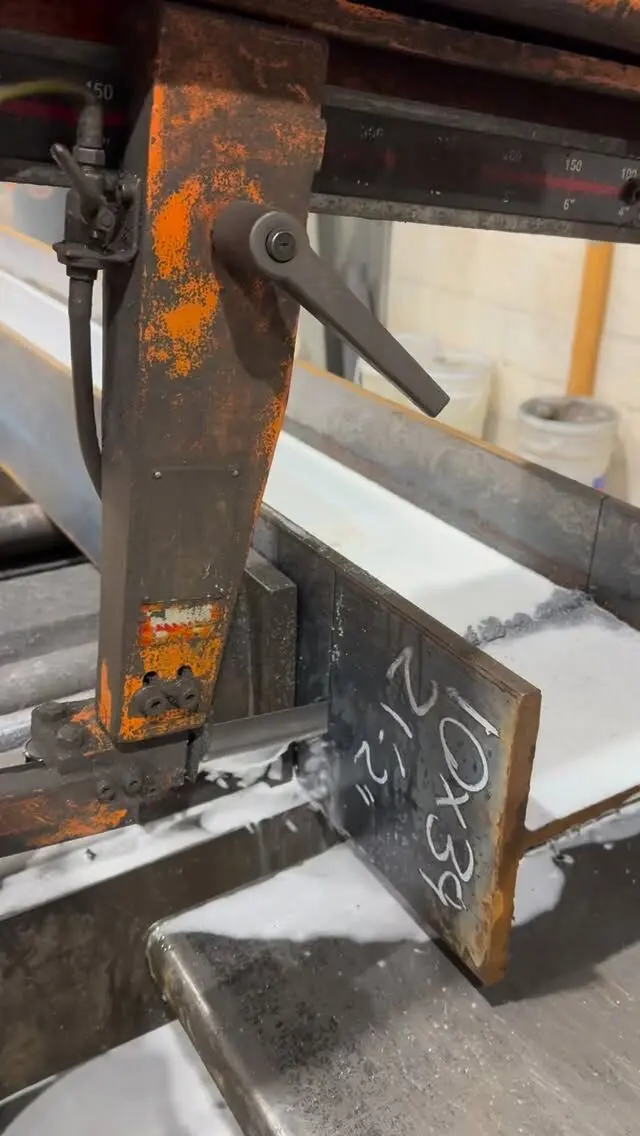
Steel stair stringers are the sloped members that carry the treads, and they are usually made from channel, flat plate, HSS tube or a single central spine called a mono stringer. There is no standard stringer size: each one is sized by design for the span, the stair width, the code loads and the deflection the stair can tolerate. Channel stringers on building stairs are commonly in the C200 to C310 range (8 to 12 inches deep), but take the size from your drawings or the fabricator's engineer. This guide covers the types, what sets the size, and how many you need.
Types of steel stair stringers
| Stringer type | What it is | Where it suits |
|---|---|---|
| Channel stringer | A C or MC channel on each side, toes usually facing out, treads bolted or welded between them | Commercial and industrial stairs, exits, pan stairs, utility stairs |
| Plate stringer | A flat steel plate on each side, cut to the stair profile or straight, treads welded or bolted to the inside face | Feature stairs in homes and offices, where a thin edge is wanted |
| HSS stringer | Rectangular or square hollow section on each side or underneath | Exterior stairs, modern stairs, longer spans |
| Mono stringer | A single central spine (HSS, plate box or W-shape) with treads cantilevered both sides | Floating and feature stairs |
| Zig-zag (saw-tooth) stringer | Plate or bent plate cut or folded into the step profile, treads sitting on top | Open-riser feature stairs |
| Double stringer with cut-outs | Stringers set under the treads, with tread brackets or folded plate on top | Stairs with wood, stone or precast treads |
On most commercial stairs the choice is practical: channel stringers are stiff, easy to connect to landings and well suited to pan treads and grating. On homes, the choice is more about appearance, and the stringer type changes how the treads attach. Our guide to steel stairs with wood treads covers the tread side of that decision.
What sets the size of a steel stringer
A stringer is a sloped beam. Its size comes from the same checks as any beam, plus a few stair-specific ones:
- Span. The horizontal distance between supports (floor to landing, or landing to landing). Longer flights need deeper or heavier stringers.
- Stair width. Each stringer carries half the stair for a two-stringer stair, so a wider stair puts more load on each one.
- Code loads. The 2024 Ontario Building Code (Article 9.8.9.1.) requires stairs to be designed for 1.9 kPa where they serve one dwelling unit or a house with a secondary suite, and 4.8 kPa for other stairs. Larger buildings are designed under Part 4.
- Deflection and vibration. A stringer that is strong enough can still feel bouncy. Slender plate stringers and mono stringers are often governed by stiffness and vibration, not strength.
- Lateral stability. A tall thin plate stringer can twist or buckle sideways unless the treads, risers or a connection brace it.
- Tread connection. The stringer must be deep enough to receive the tread connection, the nosing and any riser plate, and on channel stringers the bolt or clip layout has to fit inside the web.
- Supports. How the stringer is held at the top and bottom (bearing on a landing, bolted to a slab edge, hung from a header) affects both its size and the connection details.
The OBC gives prescriptive sizes, depths and spacing for wooden stringers in Article 9.8.9.4., but nothing equivalent for steel. That is why steel stringers are sized by design, usually on the fabricator's shop drawings, and for public and commercial stairs by an engineer. Projections matter too: stringers, handrails and their supports may not project more than 100 mm into the required stair width, which can rule out a wide channel inside a tight stairwell.
Common section sizes
These are typical sections used for stair stringers. They are a starting point for conversation, not a design.
| Stringer type | Sections often used |
|---|---|
| Channel | C200x17 to C310x31 and MC sections in the 8 to 12 inch depth range |
| Plate | Flat plate, commonly 10 mm to 20 mm thick (3/8 in to 3/4 in), with depth set by the stair profile |
| HSS | Rectangular HSS such as 203 x 102 mm (8 x 4 in) or 254 x 102 mm (10 x 4 in), wall set by design |
| Mono stringer | Larger HSS, often 203 mm (8 in) square or deeper, or a fabricated plate box |
The channel designations follow the Canadian metric naming (depth in mm by mass in kg/m); see C-channel sizes in Canada for the dimensions of each section. For plate stringers, note that plate is widely stocked in imperial thicknesses, so a 12 mm plate on a drawing may be supplied as 1/2 in (12.7 mm); the designer should accept any substitution.
How many steel stringers do you need?
- Two stringers is the normal arrangement for straight steel stairs, one at each side, with treads spanning between them.
- One stringer is a mono stringer stair. The spine has to resist twisting from people standing on one side of a tread, so it is usually a closed section such as HSS or a plate box, and its connections at top and bottom carry that twist.
- Three or more stringers come into play on very wide stairs or where treads can't span the full width, such as some precast or stone treads. Steel grating and pan treads are usually chosen to span between two stringers.
The OBC's stringer spacing limits in Article 9.8.9.4. are written for wood and don't apply to steel, but the logic is similar: the tread has to span between supports without excessive deflection. For a steel stair, the tread type and thickness and the stringer spacing are designed together.
Stringer connections and supports
Many stair problems happen at the ends of the stringers rather than in the middle:
- Top connection: bolted to a header, slab edge or landing beam, often with clip angles or an end plate, or welded to an embed plate in concrete.
- Bottom connection: a base plate anchored to the slab or footing, usually with slotted holes so the stair can be adjusted.
- Intermediate landings: either framed in steel with their own posts or hangers, or supported by walls.
- Exterior stairs: bottom ends sitting on a concrete pad or footing above grade, so the steel isn't buried.
The structure the stringer connects to has to carry the stair's load. On a renovation, a stringer that hangs off an existing floor joist or header needs a check of that member too. For layout of rise, run and stringer length, see the steel stair calculator guide, and for the rules every stair has to meet, see Ontario Building Code rules for steel stairs.
What to send for a steel stair quote
To size and price stringers properly, a fabricator needs:
- Floor-to-floor height, measured finished floor to finished floor, including flooring at both ends
- Opening size in plan, and the available run
- Stair width and whether it is private, public or a service stair
- Stringer type and look you want (channel, plate, mono, exposed or hidden)
- Tread type: grating, checker plate, pans for concrete, wood or stone (see types of steel stair treads)
- Support conditions at top, bottom and any landings
- Finish: primer, paint, powder coat or galvanizing
- Railings and whether they mount to the stringers
Steel stairs from Procut
We fabricate custom steel stairs, stringers, landings and railings, with shop drawings prepared in house and CWB certified welding. Engineering services are available where a stair needs design, and we deliver across the GTA and Ontario. Send your drawings or site measurements and we'll prepare a quote.
Request a steel stair quote, or see our steel products for channels, plates and HSS.
Frequently asked questions
What size steel channel is used for stair stringers?
Channel stringers are commonly in the C200 to C310 range (8 in to 12 in deep), but the right size depends on the span, stair width, loads and how the treads attach. Stringers are sized by design for each stair, so take a size from the drawings or the fabricator's engineer, not from a rule of thumb.
How many stringers does a steel stair need?
Most steel stairs have two stringers, one on each side. A mono stringer stair uses a single central spine with cantilevered treads. Very wide stairs may need a third stringer or stiffer treads, which the designer decides.
Does the Ontario Building Code give sizes for steel stair stringers?
No. Part 9 of the 2024 OBC gives prescriptive rules for wooden stair stringers only. Steel stringers, treads and connections are designed for the code loads of 1.9 kPa for stairs serving one dwelling unit and 4.8 kPa for other stairs.
What is the best steel stringer for a residential stair?
It depends on the look and the span. Plate stringers give a clean, thin edge for feature stairs, channel stringers are economical and stiff, and a mono stringer gives the floating look. Each changes how the treads attach and how the stair is supported.