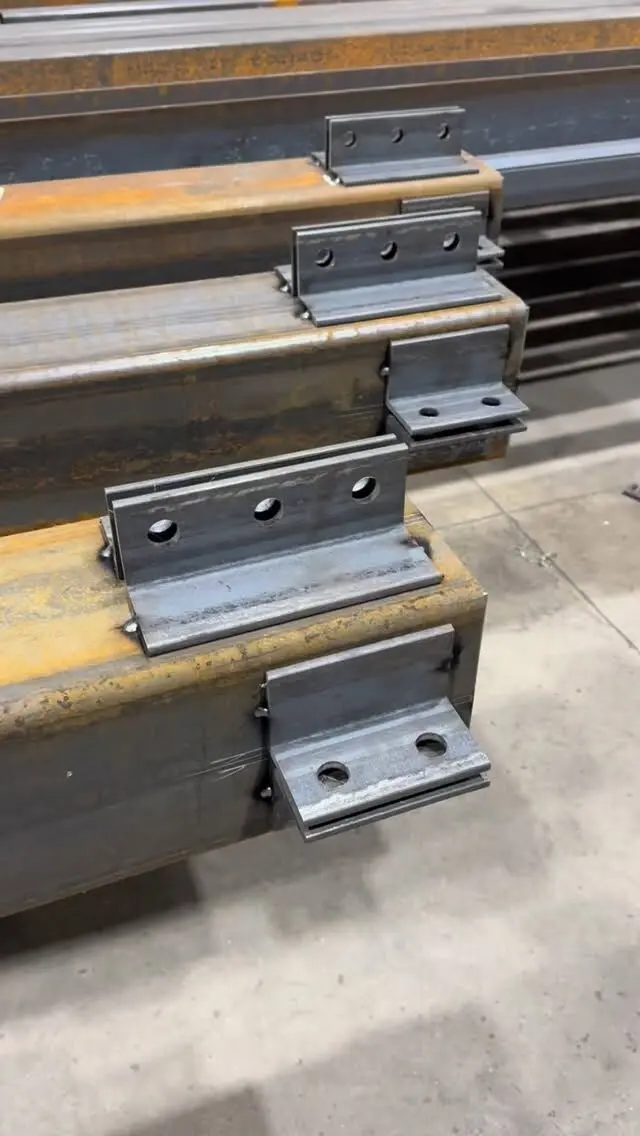
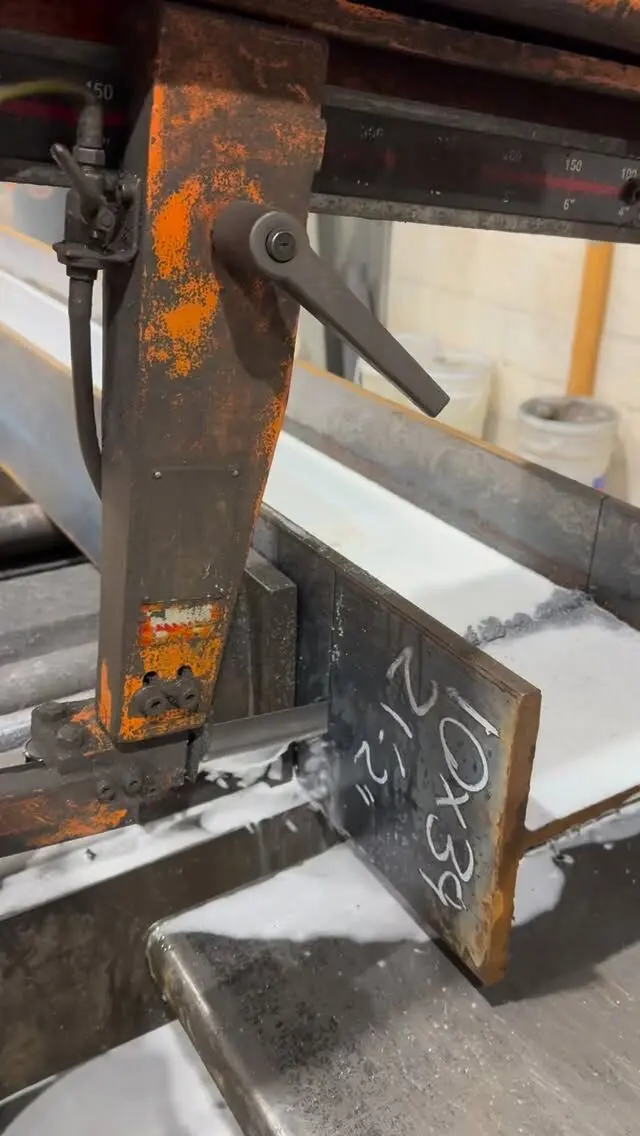
Yes, structural steel beams can be cut and welded, and new beams are cut and welded in fabrication shops every day. Cutting or welding a beam that is already installed and carrying load is different: it's a structural alteration that needs an engineer's detail, usually a building permit, temporary shoring, and welding by a company certified for structural work. Done that way, it's routine. Done without it, a cut or a weld can become the weakest point in the building.
This article explains what cutting and welding do to an existing beam, what the engineer will want to know, and how the work is normally carried out.
Why people want to cut or weld an existing beam
In renovations, existing steel often gets in the way or needs to do more than it was designed for. Common requests:
- Shortening or removing a beam to open up a basement or move a wall.
- Cutting holes through the web for ductwork, plumbing or wiring.
- Notching or coping a flange to clear a new beam, a duct or headroom.
- Extending a beam with a splice after a wall comes out.
- Reinforcing a beam with welded plates because loads are increasing.
- Attaching new steel: a new beam, post, bracket or ledger welded to the old one.
Each of these changes how the beam carries load. None of them is a do-it-yourself job.
What cutting does to a steel beam
A wide-flange beam carries bending mostly through its flanges and shear mostly through its web. Cutting either one has a direct effect:
- Flange cuts are the most damaging. Notching or trimming a flange removes the steel that does most of the work in bending, right where it's needed. Even a small notch can cut the beam's capacity at that section substantially, and the sharp corner concentrates stress.
- Web holes are less damaging, but location matters. A hole near mid-depth and away from supports and point loads is usually far easier to accept than one near the ends, where shear is highest, or close to a flange. Large openings may need reinforcing plates. Our guide to drilling and notching steel beams safely covers this in more detail.
- Shortening a beam changes its supports. If a beam gets shorter, something has to carry its end, and the new support, its connection and its footing all need design.
- Torch cutting leaves a rough, heat-affected edge. In the shop that edge is ground or controlled. Field cuts are harder to finish and inspect.
The most serious hazard is cutting a beam that is carrying load. The moment the section is reduced or severed, the load moves somewhere else, sometimes suddenly. That's why the engineer specifies temporary shoring and a sequence before any cut is made.
What welding does to existing steel
Welding a new piece onto an existing beam is common and often the simplest connection. But the engineer has to answer a few questions first.
Is the steel weldable?
Modern structural steel is made to be welded. In Canada, the "W" grades of CSA G40.21, such as 350W, are weldable structural steels, and most beams installed in recent decades will weld without difficulty using normal procedures.
Older steel is an unknown. Its grade is rarely marked, the original drawings are often gone, and some older steels have chemistry that makes them prone to cracking when welded without precautions such as preheating. When the grade can't be established, the engineer may ask for a small sample of the steel to be removed and tested so the welding procedure can be chosen properly.
Is the beam loaded while it's welded?
Welding heats a small area of the beam to very high temperatures, and steel loses strength when it's hot. On a beam carrying load, the engineer may:
- Limit the load on the beam during welding.
- Require temporary shoring.
- Specify the size, length and order of welds to control heat and distortion.
Welding reinforcing plates onto a loaded beam is a recognised technique, but it's designed, not improvised.
What's on the surface?
Paint, primer, galvanizing, fireproofing and rust all have to be removed from the weld area. Two coatings deserve extra care:
- Old paint may contain lead. It should be tested before it's heated, cut or ground, because the fumes and dust are hazardous.
- Galvanizing gives off zinc fumes when welded and has to be removed locally, then the coating repaired afterward.
Any fireproofing removed for the work has to be reinstated to the required rating.
Who is allowed to do the work
Structural steel in Ontario is designed to CSA S16, which the building code references. For welded steel under S16:
- The company doing the welding must be certified by the Canadian Welding Bureau (CWB) to CSA W47.1. That applies to field welding on an existing building as much as to shop work.
- Welds follow CSA W59, the structural welding code, which covers procedures, welder qualifications, workmanship and inspection. See CSA W59 explained.
- The engineer specifies the weld (type, size, length, location) on the drawings.
A general welder without structural certification shouldn't be welding to a beam that holds up a house. For why certification matters, see why hire a CWB certified fabricator.
Shop work vs field work
Where possible, engineers move work off site:
- Shop welding is done in good positions, with controlled conditions, proper equipment and easy inspection.
- Field welding is often overhead or in tight spaces, in a building with wood framing, insulation and finishes nearby. Hot work in a house is a real fire risk, and it calls for fire precautions and someone watching for smouldering after the work stops.
For that reason, many renovation connections are designed as shop-welded pieces that bolt on site: a plate or bracket is welded in the shop, and site work is limited to drilling and bolting. Bolted and welded options are compared in bolted vs welded steel beam connections.
Sometimes the simplest answer avoids altering the beam at all: a new post and footing, a new beam alongside, or rerouting a duct around it.
How the process usually runs
- Assessment. An engineer looks at the beam, its supports, the loads and what you want to change. They'll want the size of the beam, photos, and any existing drawings.
- Design. The engineer issues a detail showing the cut, hole, reinforcing or connection, the shoring and the sequence.
- Permit. Structural alterations generally need a building permit from the municipality, with the engineer's drawings. See permits for load-bearing wall removal for how that works in the GTA.
- Fabrication. New plates, brackets, beams or posts are fabricated to shop drawings.
- Shoring and site work. Temporary supports go in, then the cutting, welding or bolting is done by qualified people.
- Inspection. The building inspector, and on many jobs the engineer or a testing agency, checks the work before it's covered.
- Finish. Coatings and fire protection are restored.
Fabricated pieces for alterations
We fabricate beams, posts, reinforcing plates, brackets and connection pieces to engineered details, with welding done in our CWB certified shop and shop drawings prepared in-house. We also supply and install structural steel, including basement beams and posts. If your project needs engineering, ask about it when you request a quote; for site welding on an existing beam, tell us what you're planning and we'll talk through the options.
Send your drawings or photos for a quote, or see our full list of services.
Frequently asked questions
Can steel structural beams be cut?
Yes, but cutting an installed beam is a structural alteration. Removing steel from a flange or web reduces the beam's strength, and cutting a beam that is carrying load can be dangerous. An engineer should detail any cut, the beam is usually shored first, and the work generally needs a building permit.
Can structural steel be welded?
Most modern structural steel is made to be welded, including the weldable grades of CSA G40.21 such as 350W. Older steel of unknown grade may need testing before an engineer will approve welding to it, and the welding itself has to follow the welding standards with qualified people.
Can you weld to a steel beam that is carrying load?
Sometimes, but only on an engineer's instructions. Welding heats the steel locally, which lowers its strength while hot, so the engineer may limit the load, require shoring, or set a welding sequence. It is not something to decide on site.
Who can weld structural steel in Ontario?
For steel designed to CSA S16, which the Ontario Building Code references, the companies doing the welding must be certified by the Canadian Welding Bureau to CSA W47.1, and welds follow CSA W59. That applies in the field as well as in the shop.