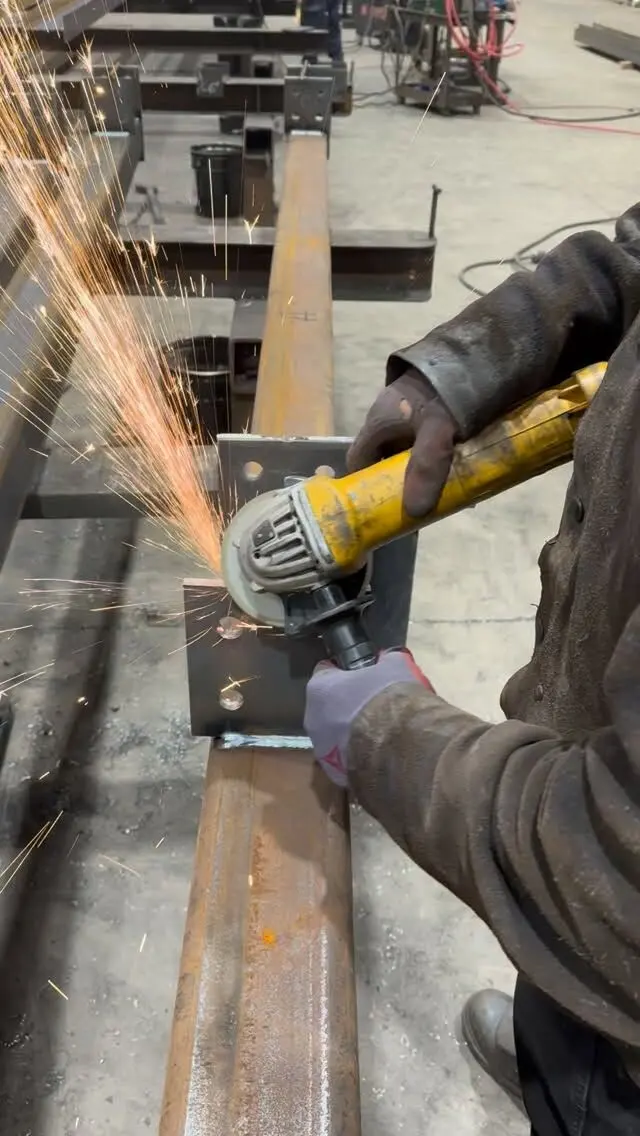
Sheet, plate and flat bar are all flat steel; the difference is thickness and how they are made. Sheet is thin, roughly under 6 mm (1/4 in), and is sold by gauge or decimal thickness. Plate is 6 mm and thicker, sold by actual thickness and cut to size. Flat bar is a narrow strip rolled to a finished width and thickness and sold in lengths. Gauge belongs to sheet only: plate is never properly specified by gauge.
Knowing which one a drawing means avoids the most common ordering mix-ups: a "10 gauge plate" that nobody can quote, or a base plate ordered as flat bar that turns out too narrow.
Sheet, plate and flat bar at a glance
| Sheet | Plate | Flat bar | |
|---|---|---|---|
| Thickness | Thin, roughly under 6 mm (1/4 in) | About 6 mm (1/4 in) and up | Light to heavy, in standard bar thicknesses |
| How thickness is given | Gauge or decimal thickness | Fraction of an inch or millimetres | Fraction of an inch or millimetres |
| Width | Wide sheets or coil | Wide plates | Narrow, standard widths |
| Edges | Mill or slit edges | Mill edges; cut parts have cut edges | Rolled mill edges on the long sides |
| Sold as | Sheets or coil | Full plates or cut-to-size parts | Bars in stock lengths |
| Typical structural use | Flashing, deck, light brackets, cladding, cold-formed framing | Base plates, cap plates, gussets, embeds, stiffeners | Straps, braces, clips, stiffeners, railing parts |
The boundary between sheet and plate is a trade convention rather than a fixed rule. A common cut-off is about 6 mm (1/4 in), but suppliers draw the line in slightly different places near it. If it matters, say the thickness.
Steel sheet and gauge
Sheet is rolled thin and supplied in sheets or coils, either hot rolled, cold rolled, or coated (galvanized or pre-painted). It is ordered by gauge, an old numbering system in which a higher number means thinner steel. Two things make gauge unreliable:
- It isn't linear. The step from one gauge to the next is not a fixed amount.
- It depends on the material and coating. The same gauge number means a slightly different thickness for uncoated steel, galvanized steel, stainless steel and aluminium. ASTM itself has described gauge as an archaic term with no general agreement on meaning.
That's why most fabricators prefer sheet ordered by decimal thickness or millimetres. Our steel plate thickness chart includes a table of common uncoated sheet gauges with their thicknesses and weights, if you need to convert one.
Where sheet shows up in construction: roof and floor deck, flashing, cladding, ductwork, light gauge studs and joists, and small brackets. Cold-formed members made from sheet are designed to CSA S136, not to the hot-rolled steel standard.
Steel plate
Plate is the material behind most fabricated connection parts: base plates, cap plates, shear tabs, gussets, stiffeners and embed plates. It is rolled wide at the mill, stocked as large plates, and then cut to the part size by plasma, oxy-fuel or shearing, and drilled or punched for bolts.
Plate is specified by its actual thickness, for example PL 3/8 in or PL 10 mm, plus the grade. In Canada most structural plate is CSA G40.21 300W or 350W, or ASTM A36 or A572 Grade 50; see steel plate grades in Canada for what those mean.
A few points that catch people out:
- "Steel plate gauge" is a sheet question. If a drawing or quote shows plate in gauge, ask for the thickness. A plate thickness chart is what most people searching for a plate gauge chart actually need.
- Metric drawings, imperial stock. Many metric plate thicknesses are supplied as the nearest imperial plate. On a structural part that substitution needs the designer's approval.
- Full plate or cut parts. Buying full plates only makes sense if you can cut them. Most projects buy finished parts. Our post on steel plate cut to size covers how cut plate is ordered, and steel plate sizes in Canada lists the standard plate dimensions.
Flat bar
Flat bar is a long, narrow strip that comes from the mill already at its finished width and thickness. It is described by width and thickness, for example 50 x 6 mm (2 x 1/4 in), and sold in stock lengths. The long edges are rolled, so they are clean and consistent without any cutting.
Common uses:
- Straps and ties between members.
- Bracing in light frames and supports.
- Stiffeners and clips where a standard width fits.
- Railings and gates, for frames, pickets and caps.
- Wear strips and trims on curbs, edges and equipment.
Flat bar is not a lintel. On its own it has very little stiffness when laid flat, and the Ontario lintel tables list angles, not bars. Our post on using angle iron as a lintel explains why.
Plate vs flat bar: which to use
Both come in the same structural grades, so the choice is mostly practical:
- Use flat bar when the part is narrow and its width matches a standard bar size. It only needs cutting to length, the edges are already finished, and it is easy to handle.
- Use plate when the part is wide, thick, or an odd width; when it has a complex outline, such as a gusset or a base plate with cut corners; or when many parts can be nested on one plate.
- Watch the edges. A strip cut from plate has cut edges that may need grinding where appearance or fit matters. A flat bar's mill edges are slightly rounded on some sizes, which can matter for a tight fit against another flat surface.
- Check tolerances. Rolled bar and cut plate have different width tolerances. If the part must fit in a slot or against a mating piece, give the dimension and tolerance on the drawing.
On a quote, the difference usually shows up as material form (bars by length or plate by the sheet) plus cutting time, rather than as a difference in steel.
How to specify each on a drawing or order
Clear descriptions save phone calls:
- Sheet: thickness in millimetres or decimal inches (or gauge, with the gauge system and whether it is galvanized), coating, sheet size and quantity.
- Plate: PL, thickness, width and length (for example PL 12 x 250 x 300), grade, hole sizes and locations, and finish.
- Flat bar: width and thickness (for example FB 75 x 10 or "flat bar 3 x 3/8 in"), length, grade if specified, holes, and finish.
For structural parts, the grade and finish matter as much as the size. Plates for exterior or wet locations are often galvanized after cutting and drilling, so mention it before fabrication.
Plates and fabricated parts made to your drawings
We cut and drill base plates, cap plates and connection plates to your details, fabricate assemblies in our CWB certified shop, and can prime or galvanize to suit. Parts are marked to match your drawings and delivered across the GTA and Ontario.
Send your drawings or parts list for a quote, or see our steel products.
Frequently asked questions
What is the difference between steel plate and steel sheet?
Thickness. Thin flat steel, roughly under 6 mm (1/4 in), is sold as sheet, usually by gauge or decimal thickness. Thicker material is plate, sold by thickness in fractions of an inch or millimetres. Suppliers draw the line in slightly different places.
Does steel plate have a gauge?
Not normally. Gauge numbers are used for sheet. Plate is specified by its actual thickness, such as 3/8 in or 10 mm. If someone quotes a plate in gauge, ask for the thickness in millimetres or inches.
What is the difference between steel plate and flat bar?
Flat bar is rolled to a finished width and thickness and sold in lengths, so it arrives with mill edges and needs only cutting to length. Plate is rolled wide and cut to the size you need. For narrow pieces in a standard width, flat bar saves cutting; for wide, thick or odd-sized pieces, plate is the source.
Is flat bar weaker than plate?
No. Flat bar and plate are made in the same structural grades, such as CSA G40.21 300W or 350W and ASTM A36. Strength depends on the grade and the cross-section, not on whether the piece came from a bar or a plate.