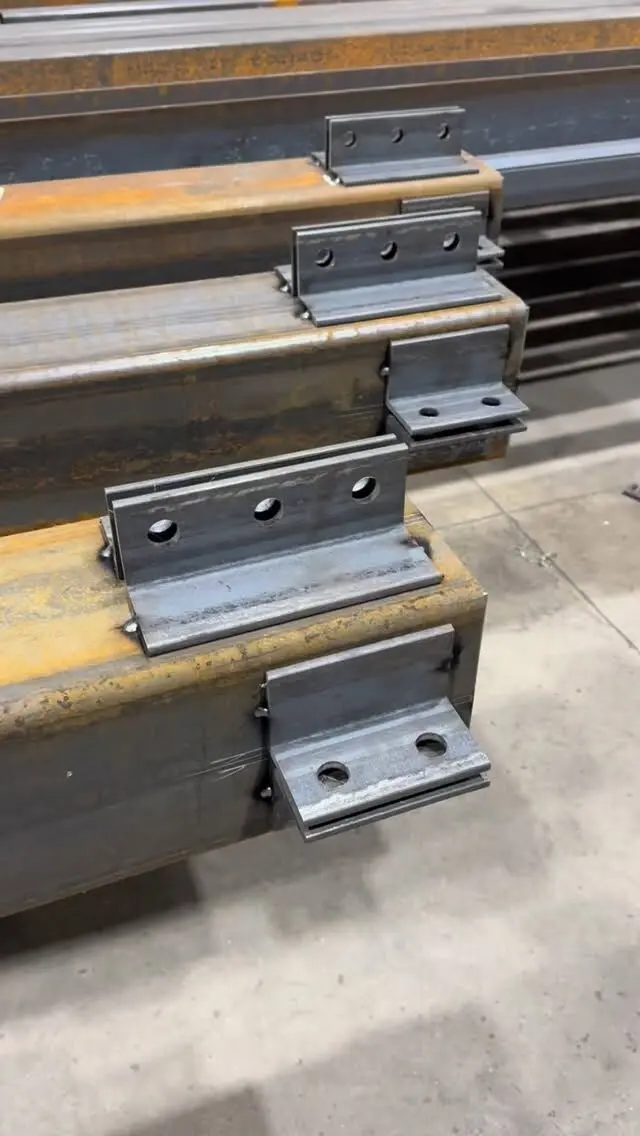
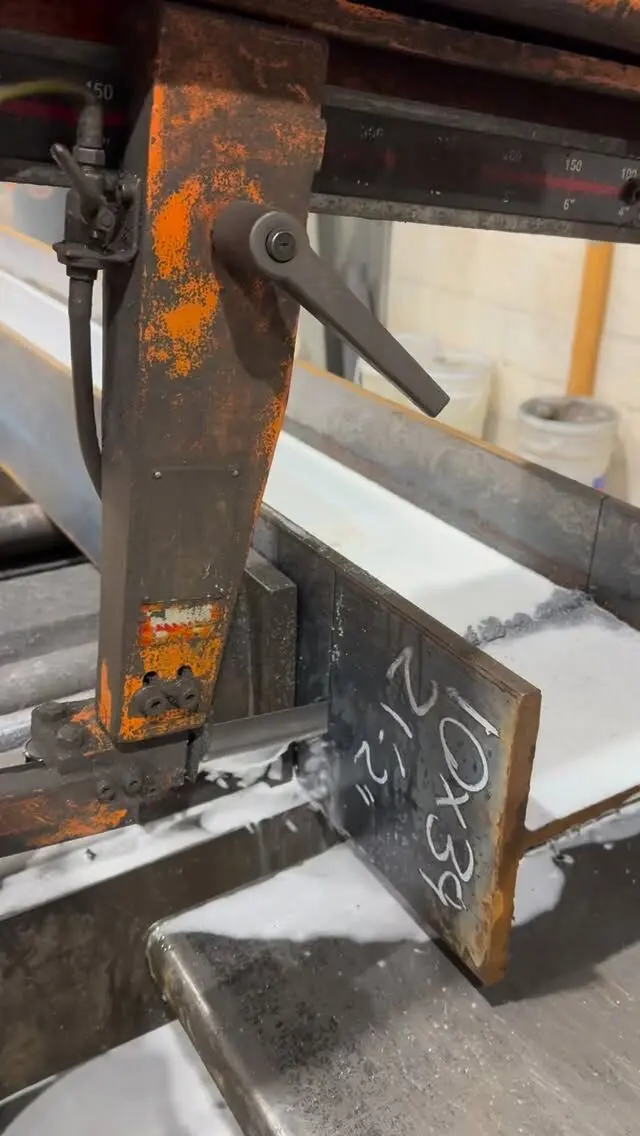
Steel detailing services turn a structural engineer's design drawings into shop drawings: the erection plans, assembly drawings and part drawings a fabricator builds from. In Canada, detailing is normally part of the fabricator's scope. The fabricator details in-house or hires a detailing firm, submits the drawings for review by the engineer of record, then fabricates from the approved set. Knowing what a detailing service delivers, and what it doesn't, helps you compare quotes and avoid gaps.
This post covers structural steel. Reinforcing steel is detailed differently, as bar lists and placing drawings; see rebar detailing services for that side.
What a steel detailing service delivers
The structural drawings show member sizes, grades, elevations and design forces. They don't show every hole, plate, weld and cut. The detailer fills that in. A complete package usually includes:
| Deliverable | What it shows | Who uses it |
|---|---|---|
| Anchor bolt or setting plan | Bolt locations, projections, embedded plates | Concrete contractor, surveyor |
| Erection (marking) plans and elevations | Where each piece goes, by piece mark | Erector |
| Assembly drawings | Each shipping piece with its plates, holes, welds and dimensions | Fabrication shop |
| Single-part drawings | Individual plates and fittings for cutting and drilling | Shop, cutting and drilling equipment |
| Bolt lists and material lists | Quantities for purchasing and shipping | Purchasing, shipping, erector |
| Machine files | Data for automated cutting and drilling, where the shop uses it | Shop equipment |
Most detailing today is done in a 3D model of the whole structure. The model catches clashes between members, makes drawing revisions faster and produces the lists automatically. The deliverable that matters to you is still the reviewed drawing set.
Shop drawings and fabrication drawings are terms people use loosely. We explain the difference in shop drawings vs fabrication drawings.
How the detailing process works
Detailing follows a fairly standard loop on Canadian projects:
- Kick-off and document review. The detailer collects the latest structural and architectural drawings, the specification and any connection design requirements.
- Questions (RFIs). Missing dimensions, conflicting elevations and unclear connections are sent to the design team as requests for information. A good detailer asks early, because every unanswered question becomes a hold on the drawings.
- Modelling and drawing. The structure is modelled, connections are added, and drawings are produced.
- Submittal for review. Drawings go to the general contractor, who forwards them to the engineer of record and the architect.
- Review and return. Reviewers stamp the drawings with a status, typically reviewed, reviewed with comments, or revise and resubmit.
- Revisions and release. Comments are picked up, revised drawings resubmitted where needed, and the approved drawings are released to the shop.
- Field changes. Changes after release are tracked with revision clouds and numbers so the shop and erector always know which version is current.
Delays usually come from step 2 and step 5. Drawings that sit in review, or design changes made after detailing has started, push fabrication back. If your schedule is tight, ask how the detailer handles partial submittals (anchor bolts first, then columns, then framing).
The review stamp is not the same as an engineer's seal on the shop drawings. We explain the difference in do shop drawings need an engineer's stamp in Ontario?
Connection design: the question to settle first
The biggest scope question in steel detailing is who designs the connections. There are two common approaches:
- Connections fully designed by the engineer of record. The structural drawings show every connection, and the detailer draws them as shown.
- Connections delegated to the fabricator. The structural drawings give member sizes and the forces each connection must carry. An engineer retained by the fabricator designs the connections, and the detailer draws them to that design.
A detailer is not a connection engineer, and detailing software doesn't make it one. If your project delegates connection design, the detailing quote should say who the connection engineer is, or the fabricator's quote should include it. Missing this is one of the most common reasons two detailing quotes differ. The connection type matters for cost too: bolted field connections with shop-welded plates are usually quicker to erect than connections that have to be welded on site.
Standards Canadian steel detailers work to
Canadian steel detailing sits on the same standards as the design:
- CSA S16 for steel design, including requirements for fabrication, erection and tolerances.
- CSA W59 for welded construction, covering the design of welded connections, joint details, workmanship and inspection.
- CSA G40.21 and ASTM material standards for steel grades.
- The CISC Code of Standard Practice, often referenced in specifications to define what's included in structural steel and how shop drawings are reviewed.
- Metric sizes. Canadian drawings are usually metric (W310x39 rather than W12x26), and a detailer used to US projects needs to work in the designations on your drawings.
Signs of a good detailing package
You can tell a lot about a detailer from the first submittal:
- Every piece has a unique mark, and the marks on the erection plans match the assembly drawings.
- Questions are flagged on the drawings, clouded and listed, rather than buried or guessed.
- Revisions are clear: revision numbers, dates and clouds on every changed sheet.
- Lists add up. Bolt and material lists agree with the drawings, so purchasing and shipping work from the same numbers.
- Anchor bolt drawings come first, so the concrete contractor isn't waiting on the steel package.
A package with these habits gets through review faster and causes fewer surprises in the shop and on site.
In-house, independent, or offshore detailing
Fabricators handle detailing in one of three ways:
| Approach | Strengths | Watch for |
|---|---|---|
| In-house at the fabricator | Detailers know the shop's equipment and preferred connections; questions get answered across the hall | Capacity when several large jobs land at once |
| Independent Canadian detailing firm | Can scale up for large projects; familiar with Canadian standards | Coordination between detailer and shop |
| Offshore detailing | Can add capacity | Time zones, metric and CSA familiarity, and more checking at the fabricator |
None of these is automatically better. What matters is that the drawings are accurate, checked before submittal, and turned around on your schedule. Ask any detailer or fabricator how drawings are checked internally before they go out for review.
Getting a steel detailing quote
Detailing is usually priced from the complexity of the job rather than its size alone. A building with many unique connections takes longer to detail than a heavier building with repetitive bays. For what drives the price, see steel detailing cost per tonne.
To get an accurate quote, send:
- The complete structural drawings and the structural specification section.
- Architectural drawings, if steel interfaces with stairs, openings or cladding.
- Whether connection design is delegated, and to what forces.
- The schedule, including when anchor bolt drawings are needed.
- Any phasing, so the detailer can plan submittals by area.
Most contractors don't buy detailing on its own. They buy fabricated steel, and the fabricator includes the shop drawings. If you're pricing the whole package, our article on steel estimating services explains what a fabricator's quote should cover.
Shop drawings done in-house at Procut
Procut Steel prepares shop drawings in-house, detailed so every piece fits the first time, and then fabricates, marks and delivers the steel to match. Engineering services are available for projects that need them, so ask us how connection design will be handled on yours. Send us your structural or architectural drawings and we'll prepare a detailed take-off and quote, free of charge.
Request a quote with your drawings, or see our shop drawing and fabrication services.
Frequently asked questions
What is steel detailing?
Steel detailing turns the engineer's structural design into the drawings and files a fabricator needs to build every piece: erection plans, assembly drawings, single-part drawings, bolt and material lists, and machine files. The detailer works out every dimension, hole and weld so the pieces fit on site.
Who prepares structural steel shop drawings?
A steel detailer, either on the fabricator's own staff or an independent detailing firm hired by the fabricator. The engineer of record and architect then review the drawings before fabrication starts.
Does a steel detailer design the connections?
Not as a detailer. Connections are either fully designed on the structural drawings or delegated to the fabricator, in which case an engineer working for the fabricator designs them and the detailer draws them. The specification says which applies.
Should I hire a detailer separately from the fabricator?
Usually not. On most projects the fabricator is responsible for shop drawings and either details in-house or hires the detailer. Hiring one separately makes sense mainly for owners or engineers who want drawings before choosing a fabricator.