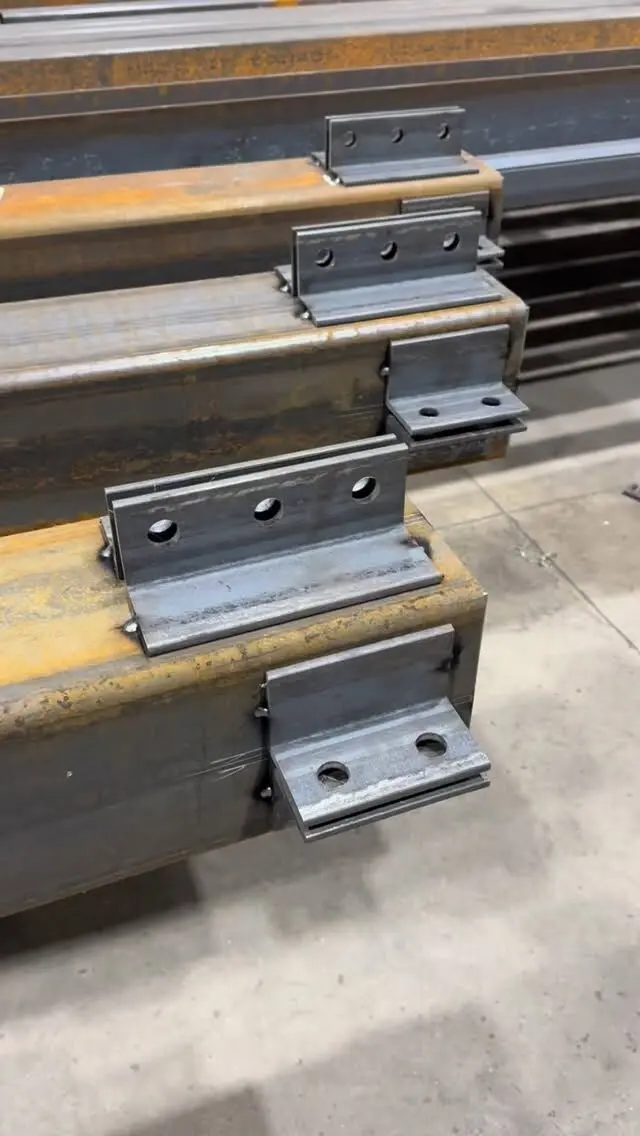
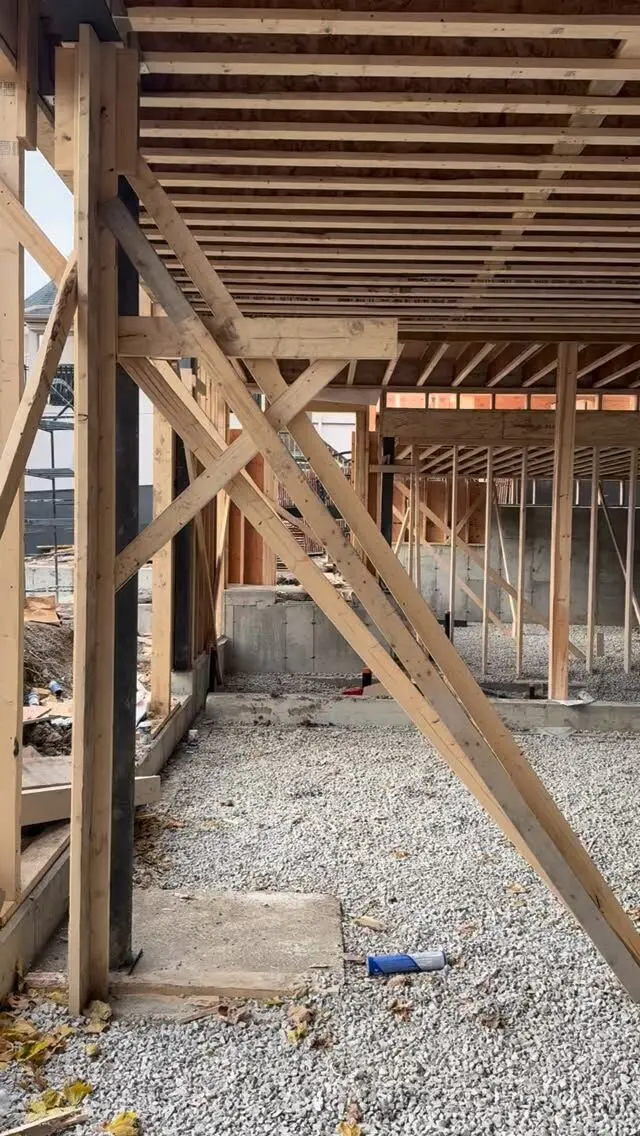
Steel beam fabrication cost is everything done to a beam between the mill and your job site: cutting to length, coping the ends, holes, plates and stiffeners, welding, camber, finish and marking. On a plain beam cut to length, fabrication is a small part of the price and the steel itself dominates. On a beam with end plates, stiffeners, a splice or a camber, the fabrication can be a large part of it. The same logic applies when you are extending, repairing or replacing a beam that's already in place.
For the whole-beam picture (weight, size, grade, delivery), see steel beam prices in Canada. This post looks at the fabrication line item and the operations that make it up.
The operations on a typical beam
| Operation | What it is | What makes it take longer |
|---|---|---|
| Cutting to length | Sawing the beam square or at an angle | Mitres, bevels, very heavy sections |
| Coping and notching | Cutting away flange and web at the end so it fits against another member | Copes at both ends, double copes, skewed framing |
| Holes | Drilling or punching bolt holes in flanges and web | Many holes, tight tolerances, slotted holes |
| Fitting | Positioning plates, angles and stiffeners to the drawing before welding | Many parts, attachments on several faces |
| Welding | Welding the fitted parts to CSA W59 | Long or multi-pass welds, complete-penetration welds |
| Camber | Curving the beam slightly upward to offset deflection | Larger cambers, heavier sections |
| Finish | Cleaning, primer or paint | Specified paint systems, galvanizing |
| Marking | Piece mark matching the erection drawings | Many similar pieces |
Fitting is the step people ask about when they search "steel beam fitting price". A fitter lays out and tacks every attachment in the right place before the welder finishes it. Fitting time depends on the number of parts and how precisely they must line up with the steel or concrete they connect to.
Attachments that add to the cost
Most of the fabrication on a beam is in the attachments:
- End plates and shear tabs for bolted connections to columns or other beams.
- Bearing plates where the beam sits on masonry, concrete or a post.
- Stiffeners at point loads and supports, where the design calls for them.
- Top plates or nailers for fastening wood framing, common in house renovations.
- Cap and base plates on the posts that support the beam. Our guide to HSS steel posts for basements and decks covers those.
- Holes for bolting to wood, LVL or other steel.
Each attachment is cut, sometimes drilled, fitted and welded. A beam with two bearing plates is a quick job; a beam with end plates, four stiffeners and a row of nailer holes is several times the shop time.
Splices: making a beam longer
A splice joins two lengths of beam. In new work, splices are used when a beam is too long to deliver or get into a building in one piece, or when the designer wants a joint at a specific location. In renovation work, "extending a steel beam" usually means adding a length to an existing beam to carry a new opening or addition.
What drives the cost of a splice:
- Design. A splice must carry the bending and shear at that point. Only the engineer can locate and design it.
- Type. Bolted splices use plates and many holes, all fabricated in the shop. Welded splices can be shop or field welds; complete-penetration welds take time and may need inspection. Our article on bolted vs welded beam connections and splices compares them.
- Location. A splice made in the shop is a controlled job. A field splice to an existing beam means work overhead, temporary shoring, fire precautions around wood framing, and field welding by a certified company.
Because of all that, extending a beam in place is often not the cheapest option. Replacing it with one new beam of the right length can cost less once shoring and field work are counted. Your engineer will compare the two.
Repairing a damaged or rusted beam
Beams get damaged by corrosion (from leaks or moisture in basements and garages), by trades cutting holes or notches through flanges, and by overloading. Repairs generally:
- Start with an assessment by an engineer who has seen the beam, ideally with the rust cleaned back to sound metal so the remaining thickness can be measured.
- Restore lost section by welding or bolting plates to the flanges or web, or by adding stiffeners.
- Need shoring if the beam has to be unloaded while it is repaired.
- Need protection afterwards: cleaning and painting, and fixing the source of the moisture.
The repair plates are fabricated in the shop to the engineer's sketch and installed on site. The cost drivers are the extent of the damage, how much has to be done in the field, access, and the shoring needed. A beam that has lost a lot of section, or that sits in a hard-to-reach place with poor access for welding, may be better replaced.
Replacing a beam
Replacement is a different job from fabrication alone. The beam itself, cut to length with plates and holes, is usually the smallest part of the cost. The rest is:
- engineering and usually a building permit,
- temporary shoring of the floor above,
- removing the old beam,
- new posts and footings where the design requires them,
- getting the new beam into the building and into position,
- making good: drywall, flooring, finishes.
Our guide to the cost to install a steel beam in a basement in Ontario walks through each of those. Searches for "I-beam repair cost" or "steel beam replacement cost" usually land in the same place: the beam is one line; access, shoring and finishing are most of the rest.
How to keep fabrication cost down
You can't change the structure without the engineer, but you can avoid paying for work twice:
- Confirm site dimensions before ordering. A beam that's too short goes back to the shop or gets spliced.
- Settle connection details on paper. Holes and plates added in the field cost more than in the shop.
- Repeat details. Where several beams can share the same connection, drawings and setup are shared.
- Ask about delivery and handling limits. If the beam can't be delivered or carried in as one piece, plan the splice with the engineer up front rather than discovering it on delivery day. See standard steel beam lengths and delivery limits.
- Choose the right finish. Shop primer is normal for interior beams that will be covered.
Get a beam fabrication quote
We fabricate steel beams with connections and camber as specified, including heat cambering, plus posts with base and cap plates welded on, with CWB certified welding and shop drawings prepared in-house. We also supply and install basement beams and posts. Take-offs and quotes are free: send us your engineer's drawings and site dimensions, and see our services for fabrication, delivery and installation across the GTA and Ontario.
Frequently asked questions
What does beam fabrication include?
Everything done to the beam after it is bought: cutting to length, coping the ends, drilling or punching holes, fitting and welding plates and stiffeners, cambering if specified, priming or painting, and marking the piece to the shop drawings.
Can you extend a steel beam?
Sometimes, with a splice designed by an engineer, either bolted or welded. Splicing adds design, fabrication and possibly field welding, so replacing the beam with one full-length piece is often simpler where access allows.
Can a damaged or rusted steel beam be repaired?
Often, yes. Typical repairs add welded or bolted plates to restore lost section, but the repair has to be designed by an engineer who has seen the beam, and field welding should be done by a CWB certified company.
Is it cheaper to buy a plain beam and fabricate on site?
Rarely for structural work. Shop drilling and welding are faster and more accurate, and field welding on structural members still has to meet the same certification and inspection requirements.