Most residential steel beams go into houses without a crane: they're carried or rolled in through a door, window or walkout, then raised onto shoring or their bearings with a material lift, a staged lift on jacks and cribbing, or a chain hoist on a rated frame. Which method works depends on four things: the beam's weight, its length, the route into the house and the headroom where it's going. Start by working out the weight, because it decides almost everything else.
This post explains the methods contractors use so you can plan access, ask the right questions and know what a safe lift looks like. Lifting a beam that weighs as much as two or three people is dangerous work for anyone without the equipment and experience, so treat this as a planning guide, not a set of instructions.
Start with the weight
A metric W-beam's name tells you its weight. In W200x27, the 27 is the approximate mass in kilograms per metre. Multiply by the length in metres for the beam weight:
| Beam | 4 m | 6 m | 8 m |
|---|---|---|---|
| W150x22 | about 88 kg | about 132 kg | about 176 kg |
| W200x27 | about 108 kg | about 162 kg | about 216 kg |
| W250x33 | about 132 kg | about 198 kg | about 264 kg |
| W310x39 | about 156 kg | about 234 kg | about 312 kg |
Values are calculated from the nominal mass in the designation. Welded bearing plates, connection plates and a wood nailer add to it. Imperial sizes work the same way in pounds per foot: a W8x18 is about 18 lb per foot. For more on reading the designations, see how to read steel beam sizes.
Weight isn't the only problem. A long beam is awkward, it flexes when picked up from one point, and its weight sits on whatever is carrying it, including the floor under a lift.
Getting the beam into the house
Before anyone thinks about lifting, the beam has to get to where it's going. Walk the route with a tape measure:
- The door or opening. A patio door, walkout or front door is the usual way in for main-floor beams. For basements, a walkout is easiest; otherwise a basement window opening (sometimes with the window removed) or the stairs.
- Turns. A long beam that fits through a door may not make the turn at the bottom of a stair or into a hallway. Measure diagonals, not just widths.
- The floor. Rolling a beam on a dolly or skates puts its weight on small wheels. Protect finished floors and check what's under them.
- The final position. Ducts, pipes and wires near the beam line may need moving before the beam can be raised.
If the full length won't go in, there are two options. Bring the beam in through a temporary opening in a wall, or have the engineer design a splice so it arrives in shorter pieces and is bolted together in place. The splice is part of the structure, not a convenience for the installer. Our post on bolted vs welded beam connections and splices explains how they work, and standard steel beam lengths and delivery limits covers the delivery side.
Moving it horizontally is done with beam dollies, moving skates, pipe rollers on a firm surface, or a pallet jack under a short beam. Keep the beam stable on its flange; a narrow beam on rollers can tip.
Ways to lift a steel beam without a crane
| Method | Best for | Limits |
|---|---|---|
| Crew with straps or carrying bars | Lighter, shorter beams onto low shoring | Weight per person, coordination, stairs |
| Material lift ("beam lift") | Raising a beam to ceiling height in an open room | Rated capacity and height, floor strength, space to roll in |
| Jacks and cribbing (staged lift) | Heavier beams, tight spaces, small lifts | Slow; needs solid cribbing and careful control |
| Chain or lever hoist on a rated frame | Lifting where a lift can't fit | Needs a rated gantry or A-frame; never hang from house framing |
Crew lift
Several people lift together with straps or carrying bars and set the beam onto shoring, sawhorses rated for the load, or its bearings. It works for shorter, lighter beams set at low height. It fails on stairs, at full ceiling height and when the beam is heavier than the crew can control. One person stumbling puts the whole weight on everyone else.
Material lift
A material lift, often rented as a "beam lift" or "steel beam lifter", is a wheeled mast with a winch and forks or a cradle. The beam is loaded at floor level and winched up to ceiling height, then rolled into position. Often two are used, one near each end of a long beam.
- Stay within the rated capacity at the actual load position on the forks; capacity drops as the load moves away from the mast.
- Check the maximum height against the bearing elevation.
- The floor under the lift carries the beam and the lift. On a suspended floor, check it can take it.
Jacks and cribbing
A staged lift is the traditional way to raise a heavy beam in a tight space:
- Raise one end a short distance with a jack.
- Build cribbing (a square, interlocking stack of timbers) up under it.
- Lower onto the cribbing and move to the other end.
- Repeat in small steps until the beam is at height.
Screw jacks and hydraulic jacks rated for the load are both used. The rules are strict: cribbing follows the load up, the beam is never held only by jacks, jacks bear on solid surfaces, and nobody puts a hand or body under the beam at any point.
Chain hoist on a rated frame
A chain hoist or lever hoist hung from a portable gantry or A-frame that's rated for the load can lift a beam straight up where a lift won't fit. The hoist must never hang from joists, rafters or ceiling framing that wasn't designed for it.
Setting the beam on its bearings
Raising the beam is only half of the lift. Setting it is where control matters most:
- Temporary support first. The beam lands on shoring or temporary posts before it's released from the lift or jacks.
- Check it's upright. A W-beam should sit with its web vertical. A beam that leans carries load poorly and can roll.
- Secure before letting go. Bolt, fasten or brace the beam as the drawings require before removing lifting gear.
- Don't use the beam to lift the house. Raising the floor above to meet the beam is an engineering decision, done gradually, not a side effect of the lift.
For the full basement sequence, see how to install a steel beam in a basement.
Safety rules for every beam lift
- Rated equipment only, inspected before use and used within its rating.
- Plan the lift before the beam arrives: route, method, where each person stands, who gives signals.
- Nobody under a suspended or jacked load, ever.
- Gloves, safety boots and eye protection, and clear floors along the route.
- Know when to stop. If the beam binds, shifts or the plan isn't working, set it down on solid support and rethink.
Contractors working on your home are bound by Ontario's Occupational Health and Safety Act and its construction projects regulation (O. Reg. 213/91), which covers equipment, rigging and hoisting on construction sites.
When to bring in a crane or a specialist crew
A crane or boom truck may still be the right call when a very long or heavy beam has to go into an upper floor, through a roof opening or across a yard with no access for equipment. On most residential jobs, though, the beam is delivered to site and the indoor move and lift are handled by the installing crew with the methods above.
Getting the beam in and up
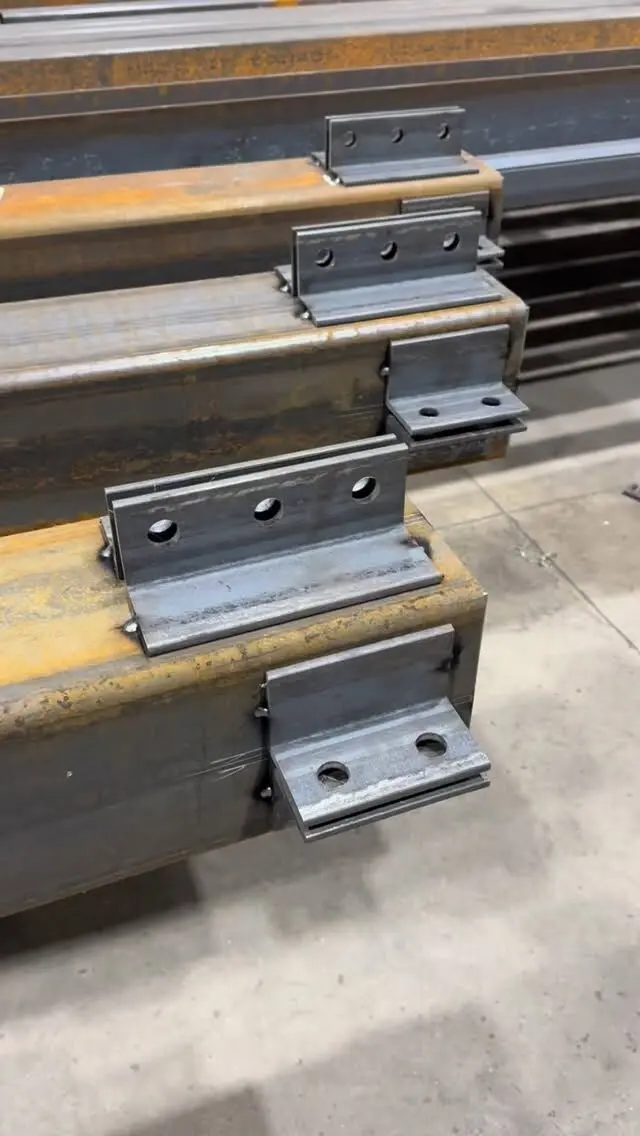
We supply, fabricate and install structural steel for homes, including basement beams and posts, and we deliver across the GTA and Ontario. If your engineer has detailed a splice, we fabricate the beam sections with plates and holes made to the drawings. Send us your drawings and a note about access for a quote on the beam, supplied or supplied and installed, and see our services for how we handle installation.
Frequently asked questions
How heavy is a residential steel beam?
A metric W-beam's designation includes its approximate mass in kilograms per metre, so multiply that number by the length. A W200x27 is about 27 kg per metre, so a 6 m beam weighs roughly 160 kg before plates and connections are added.
What is a steel beam lifter?
Usually a material lift: a wheeled, counterweighted mast with a winch and forks or a cradle that raises a beam to ceiling height. They're rented for setting beams and ducts. Use one only within its rated capacity, height and load position, on a floor that can carry it.
Can you lift a steel beam with bottle jacks?
Jacks are used, but only in a staged lift on solid cribbing: one end is raised a short distance, cribbing is built up under it, then the other end, and so on. A beam should never be held up by jacks alone or have anyone working under it while it is on jacks.
What if the beam is too long to get into the house?
The engineer can design a splice so the beam arrives in two or more pieces and is bolted together in place. The splice location and connection are part of the structural design, so it can't be improvised on site.