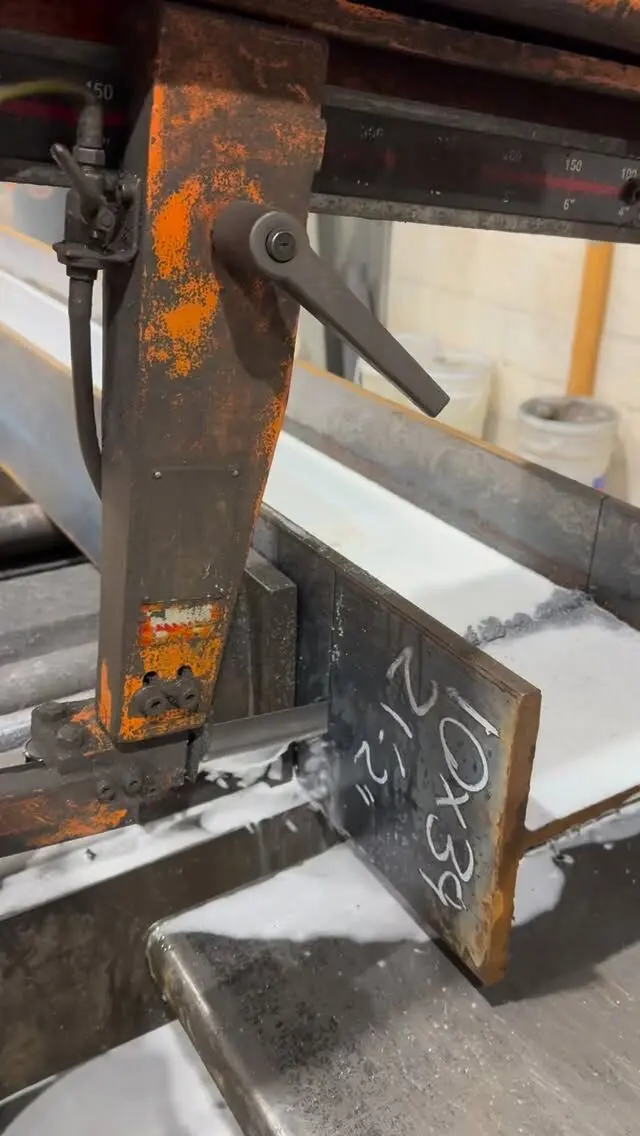
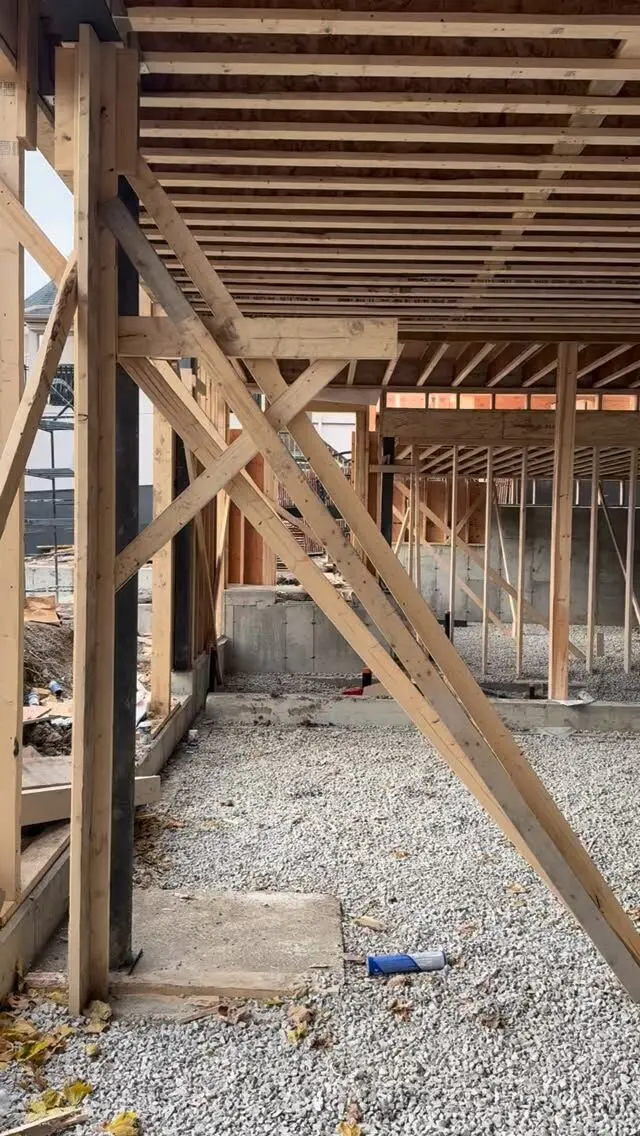
Yes, angle iron rusts, and so do C-channel, HSS and steel plate. All common structural shapes are carbon steel, and they rust whenever moisture and oxygen reach bare metal. What differs between shapes is where they rust first: angles and channels where water sits on a leg or flange, HSS from the inside, and base plates at the concrete line. A primer and paint system is fine for steel indoors or steel that is easy to maintain. Hot-dip galvanizing is usually the better finish for exterior steel, especially tubes, because it coats every surface, inside and out.
For the general question of when structural steel needs any coating at all, and what the Ontario Building Code says about it, see does structural steel need to be painted or galvanized. This post looks at it shape by shape.
Why shape matters for rust
Rust needs water, and water goes wherever the shape lets it. Two pieces of steel with the same coating can last very different lengths of time depending on how they are oriented and detailed:
- Horizontal surfaces that hold water stay wet for days after rain.
- Crevices between plates, back-to-back angles or a member and a wall trap moisture and stay damp.
- Closed shapes hide corrosion inside where nobody sees it.
- Contact with concrete, masonry or soil keeps steel damp and, near roads and driveways, salty.
Good detailing (drain holes, sealed or vented tubes, gaps or seal welds at crevices, and members oriented to shed water) often matters as much as the coating.
Angle iron
Angles are open shapes, so every surface can be painted and inspected. They rust fastest in three situations:
- Legs that form a trough. An angle with both legs pointing up holds water and dirt along the corner. Turned the other way, it sheds water. Where the orientation is fixed by the design, drain holes or slots help.
- Lintels in masonry. Lintel angles sit inside brick walls that get wet and dry for decades. As the steel rusts, the rust takes up more room than the steel did and can push the brick up and crack the joints above. See do steel lintels rust and, for repair, replacing a rusted steel lintel.
- Back-to-back and bolted angles. The tight gap between two angles, or between an angle and a plate, holds moisture. Exterior details often keep a gap that can be painted, or seal-weld the edges so water cannot get in.
C-channel
Channels behave a lot like angles, with one extra trap: the space between the flanges.
- Toes up, the channel is a gutter. A channel laid flat with its flanges pointing up holds water, leaves and grit along the whole length. Exterior channel is usually oriented web-up or vertical, or given drain holes in the web.
- Toes against a wall. A channel ledger or stringer with its open side against masonry or wood traps moisture behind it. Paint or galvanize all faces before installation, and keep a drainage path.
- Ground-level channel. Channel frames on or near grade, such as trailer frames, equipment skids and bases, see splash, salt and mud. Galvanizing is common here.
HSS: the tube that rusts from inside
HSS is the shape most likely to surprise people. Water gets into a tube through open ends, unsealed bolt holes, poorly closed caps and condensation, and then it stays there. The tube can rust through from the inside while the outside paint looks fine, and water trapped in an exterior post can freeze and split the wall.
There are two sound approaches:
- Seal it. Cap plates welded all around at both ends so no water can enter, with the outside painted. This works well for interior posts and for painted exterior members where the seal welds are continuous.
- Galvanize it. Hot-dip galvanizing coats the inside as well as the outside, but the tube must have vent and drain holes so molten zinc can flow in and out and trapped air and moisture can escape. A sealed tube dipped in molten zinc is dangerous. The hole sizes and positions belong on the shop drawings.
Some light tubing is sold pre-galvanized from the mill, with a thinner zinc layer applied before fabrication. Welding burns that coating off locally, so welds need touching up, and the coating on the inside may be limited. Structural HSS is normally supplied bare and galvanized after fabrication when the job needs it. For the shape itself, see what is HSS steel.
Base plates and posts at grade
The concrete line is the worst place on any post. Water, salt and dirt collect around the plate, and grout or concrete holds moisture against the steel.
- Keep the plate above water. Posts on base plates set on a pier or curb above the surrounding grade last longer than posts set in a puddle.
- Galvanize the plate and the anchors together. If the post and plate are galvanized, use galvanized anchor rods and nuts as well, so the whole connection has the same protection.
- Watch embedded posts. Steel cast into concrete is protected below the surface, but corrosion concentrates right at the line where it comes out. See embedding steel posts in concrete vs base plates.
Galvanized vs painted: how they compare
| Hot-dip galvanized | Primer and paint system | |
|---|---|---|
| How it protects | Zinc barrier, plus zinc corrodes first where scratched | Barrier only; rust starts where the film is broken |
| Inside of tubes | Coated, if vented and drained | Not coated |
| Damage in handling | Tolerates scratches and nicks well | Scratches need touch-up to stop rust spreading |
| Colour | Grey, dulling with age | Any colour |
| When it's applied | After all fabrication is finished | Shop and/or field |
| Size limits | Piece must fit the galvanizer's bath | None |
| Field cuts and welds | Need zinc-rich touch-up | Need primer and paint touch-up |
| Maintenance | Usually little for many years | Periodic inspection and recoating |
| Best fit | Exterior posts, lintels in wet walls, canopies, platforms, railing posts | Interior steel, exposed architectural steel, pieces too big to dip |
The commonly referenced specifications are ASTM A123 (and CSA G164 in Canada) for galvanizing fabricated steel, ASTM A153 or F2329 for galvanized bolts and hardware, and ASTM A780 for repairing damaged galvanized coatings. Your project specification says which applies.
Duplex systems (galvanizing plus paint) give colour and long life together. Painting over galvanizing needs the right surface preparation and a compatible paint system, or the paint peels.
Getting the finish right before fabrication
The finish has to be decided before the steel is made, because it changes the shop drawings: vent and drain holes for tubes, drain holes in channels and angles, gaps or seal welds at crevices, and areas left bare for field welding. Tell your fabricator where each piece will live (dry interior, unheated space, exterior, near salt) and what the specification calls for.
We fabricate angles, channels, HSS posts and base plates to your drawings in our CWB certified shop, and we can prime or galvanize to suit, with the venting and detailing that each finish needs. Thinking about galvanizing whole beams? See galvanized steel beams.
Send your drawings for a quote, or see the services we offer.
Frequently asked questions
Does angle iron rust?
Yes. Angle iron is ordinary carbon steel and rusts when moisture and oxygen reach it. Indoors in a dry space it rusts very slowly. Outdoors, in brick walls and anywhere salt reaches it, it needs a primer and paint system or hot-dip galvanizing.
Will C-channel rust outside?
Bare C-channel will rust outside, and it rusts fastest where water sits, such as a channel laid with its toes up or debris packed against the web. Galvanizing, or a good paint system with the channel detailed to drain, gives it a long life.
Is HSS steel galvanized?
Not normally. Structural HSS is usually supplied bare. It can be hot-dip galvanized after fabrication, which coats it inside and out, but it must have vent and drain holes so molten zinc and gases can flow through safely.
Is galvanized better than painted steel?
For exterior steel that is hard to maintain, galvanizing usually lasts longer and tolerates scratches better, and it protects the inside of tubes. Paint gives colour choice, suits steel that cannot be dipped, and is easy to recoat. Galvanizing plus paint, called a duplex system, combines both.