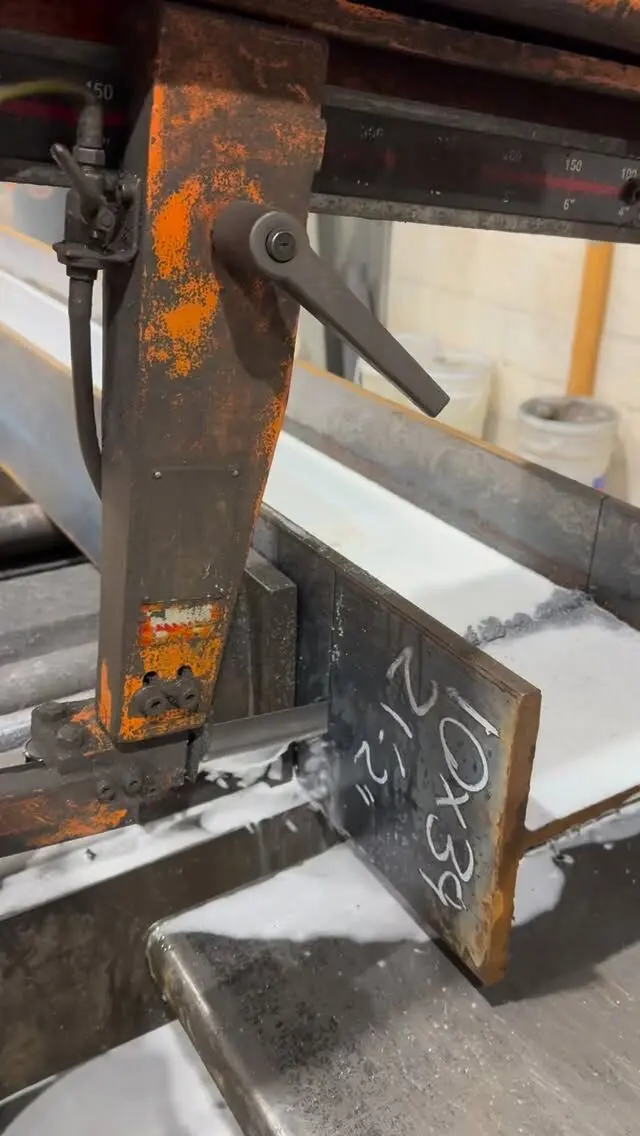
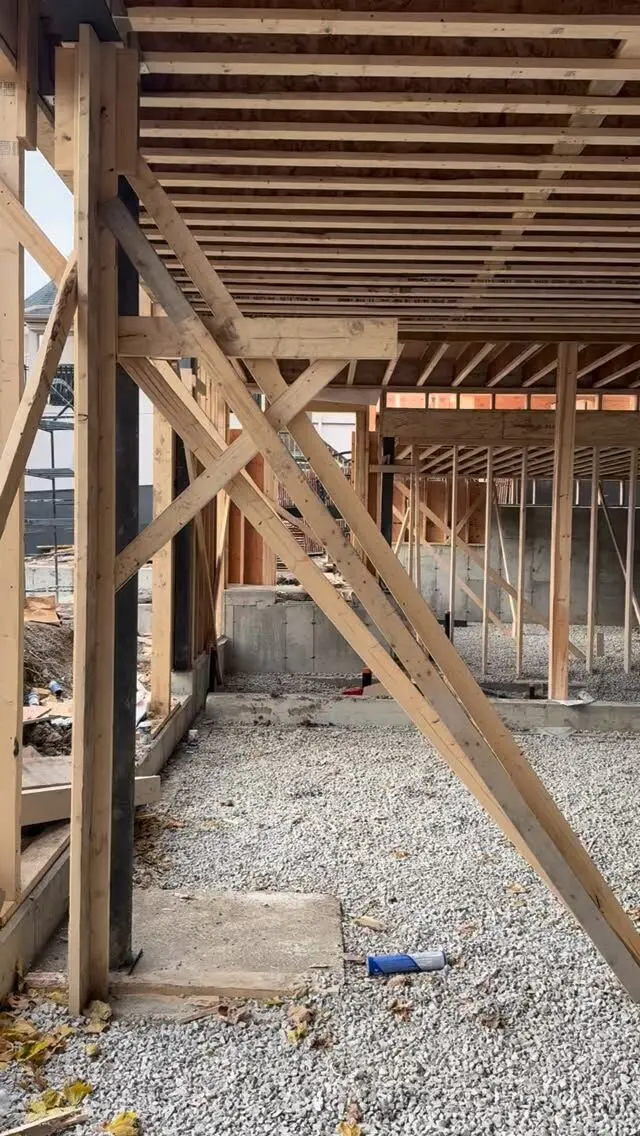
Structural steel does not always need to be painted. Steel inside a dry, heated building often needs no more than a shop primer, and some steel is deliberately left bare. Steel exposed to weather, moisture or salt does need protection, either a paint system or hot-dip galvanizing. In Ontario houses, the building code sets a few specific minimums, including shop priming of exterior steel beams with rust-inhibitive paint. Beyond that, the finish comes from the project specification and the conditions the steel will see.
Does structural steel rust?
Yes. Ordinary structural steel is carbon steel, and it rusts whenever moisture and oxygen reach it. What changes is how fast:
- Dry, heated interiors. Steel inside the insulated, heated part of a building sees little moisture. Corrosion is very slow, and beams installed decades ago in basements are often in good shape under light surface rust.
- Unheated or damp interiors. Garages, crawlspaces, unheated warehouses and rooms with condensation keep the steel damp for long periods.
- Exterior steel. Rain, snow and freeze-thaw cycles, plus de-icing salt near driveways, sidewalks and parking areas, drive steady corrosion.
- Steel at or near grade. Posts embedded in or sitting on concrete outdoors corrode fastest at the line where water collects. See embedding steel posts in concrete vs base plates.
- Aggressive environments. Pools, parking garages, food plants and chemical exposures need coating systems designed for them.
The finish should match the worst condition the steel will see, not the average.
What the Ontario Building Code requires
The 2024 Ontario Building Code says relatively little about coating steel. For houses and small buildings under Part 9:
| Article | Requirement |
|---|---|
| 9.23.8.2. | Exterior steel beams shall be shop primed with rust-inhibitive paint. |
| 9.17.3.3. | Exterior steel columns susceptible to corrosion shall be treated on the outside surface with at least one coat of rust-inhibitive paint. |
| 9.20.5.2.(4) | Steel angle lintels supporting masonry shall be prime painted or otherwise protected from corrosion. |
For foundations designed under Part 4, Article 4.2.3.10. requires adequate protection of exposed steel where conditions are corrosive to steel.
For engineered buildings, the structural steel is designed to CSA S16, and the drawings and project specification set out which steel is primed, which is painted with a full system, which is galvanized and which stays bare. That specification is what the fabricator follows. If there isn't one, ask your designer before the steel is ordered.
The main finish options
| Finish | What it is | Typical use |
|---|---|---|
| Bare steel | No coating | Interior steel that stays dry, steel to be encased in concrete, steel to receive certain fireproofing products |
| Shop primer | One coat applied in the fabrication shop | Interior steel; protection during shipping and erection; base for a finish coat |
| Paint system | Primer plus intermediate and finish coats, chosen for the exposure | Exposed interior steel, exterior steel where colour matters, industrial exposures |
| Hot-dip galvanizing | Zinc coating applied by dipping the fabricated piece in molten zinc | Exterior posts, canopies, balcony and deck framing, lintels in wet walls |
| Galvanized and painted (duplex) | Galvanizing with a compatible paint system over it | Exterior steel that needs colour and long life |
Shop primer
A shop primer is a single coat applied after the steel is cleaned. It protects the steel during fabrication, shipping and erection and gives finish paint something to grip. On its own it is thin, gets scuffed in handling, and isn't meant as a long-term exterior finish. Inside a dry building it's often all the steel needs.
Paint systems
Where steel is exposed to weather or will be on show, the specification calls for a paint system: surface preparation to a stated standard (often by blast cleaning for demanding exposures), a primer, and one or more finish coats. Surface preparation matters more than the paint. Paint over mill scale, oil or loose rust fails early.
Hot-dip galvanizing
Galvanizing coats the steel inside and out with zinc, which protects it as a barrier and also corrodes first where the coating is scratched. A common specification for fabricated steel is ASTM A123. It's the usual choice for exterior steel that would be hard to repaint. The practical points:
- It happens after fabrication. All cutting, drilling and welding has to be finished first.
- Closed shapes need vent and drain holes. HSS posts, tubes and boxed sections must be detailed so zinc and gases can flow in and out safely. This has to be on the shop drawings.
- Size and shape matter. Pieces have to fit the galvanizer's bath, and thin or asymmetric pieces can distort from the heat.
- Field work damages it. Cuts, holes and welds made on site expose bare steel and need touch-up with a zinc-rich coating.
For galvanizing and painting on lintels specifically, see do steel lintels rust.
Weathering steel
Some structural grades are made to form a stable, protective rust layer when exposed to wetting and drying. CSA G40.21 includes atmospheric corrosion-resistant grades for this. Weathering steel is used mostly on bridges and architectural work, needs the right exposure to perform, and can stain concrete and masonry below it. It's rarely a choice for houses.
Steel that should stay bare
Painting everything isn't always better. Some surfaces are left uncoated on purpose:
- Steel to be encased in concrete. Concrete protects the steel, and bare steel bonds better.
- Faying surfaces of slip-critical bolted joints. These connections rely on friction between the plies, so the contact surfaces are left bare or given only a coating qualified for that purpose.
- Areas to be field welded. Paint near a site weld burns and contaminates it, so those areas are often kept clear and touched up after welding.
- Steel that will be fireproofed. Some spray-applied and intumescent products need bare steel or a specific compatible primer. Our guide to structural steel fireproofing in Ontario covers when protection is required.
The drawings or specification should say which surfaces stay bare. If they don't, ask before fabrication.
Can structural steel be exposed?
Yes, and exposed beams and columns are common in lofts, retail spaces and modern houses. Exposed steel brings three extra considerations:
- Finish. Exposed interior steel is usually primed and painted with a finish coat. Exterior exposed steel needs a paint system or galvanizing.
- Appearance of the fabrication. Steel that will be on show is often specified as architecturally exposed structural steel, with tighter standards for weld appearance, grinding and fit-up. That adds shop time, so it should be called out on the drawings.
- Fire protection. In buildings where the code requires a fire-resistance rating, exposed steel may need an intumescent coating or another approved method.
Painting existing steel
For a basement beam or post with light surface rust, maintenance is straightforward: remove loose rust and flaking paint back to sound metal, prime bare spots with a rust-inhibitive primer, and finish with a suitable metal paint. Heavy rust that has caused flaking layers, pitting or lost thickness is a different matter. If a beam, post or lintel has lost section, have an engineer look at it before painting over it.
Getting the finish right from the start
The finish is easiest to get right before the steel is fabricated. Tell your fabricator where each piece will be and what the specification calls for, especially if anything is to be galvanized, so holes, vents and connections are detailed for it on the shop drawings.
We fabricate beams, posts, lintels, plates and miscellaneous steel to your shop drawings in our CWB certified shop and deliver across the GTA and Ontario. We can prime or galvanize to suit the job, so include the finish your drawings or specification call for when you request a quote.
Send your drawings for a quote, or see the services we offer.
Frequently asked questions
Does structural steel need to be painted?
Not always. Steel inside a heated, dry building often performs fine with only a shop primer, or even bare where the specification allows. Exterior steel and steel in damp or salty conditions needs protection, and the Ontario Building Code requires exterior steel beams in houses to be shop primed with rust-inhibitive paint.
Does structural steel rust?
Yes. Ordinary carbon steel rusts when it is exposed to moisture and oxygen, and faster with salt. Indoors in a dry, heated space, rusting is very slow. Outdoors, near grade, or anywhere water and de-icing salt reach it, unprotected steel corrodes steadily.
Is structural steel galvanized?
Not by default. Most structural steel is supplied bare or shop primed. Hot-dip galvanizing is specified for steel exposed to weather or moisture, such as exterior posts, canopies, balcony framing and lintels in wet locations. It is done after fabrication, so it has to be planned before the steel is made.
Can structural steel be exposed?
Yes, but exposed steel needs a finish suited to where it is, and in some buildings it also needs fire protection. Steel that will be on show is often specified to a higher standard of fabrication finish, sometimes called architecturally exposed structural steel.
Should structural steel be primed before it is encased in concrete?
Usually not. Steel that will be embedded in concrete is commonly left unpainted where it is encased, because concrete protects it and bonds better to bare steel. The drawings or specification say which surfaces stay bare.