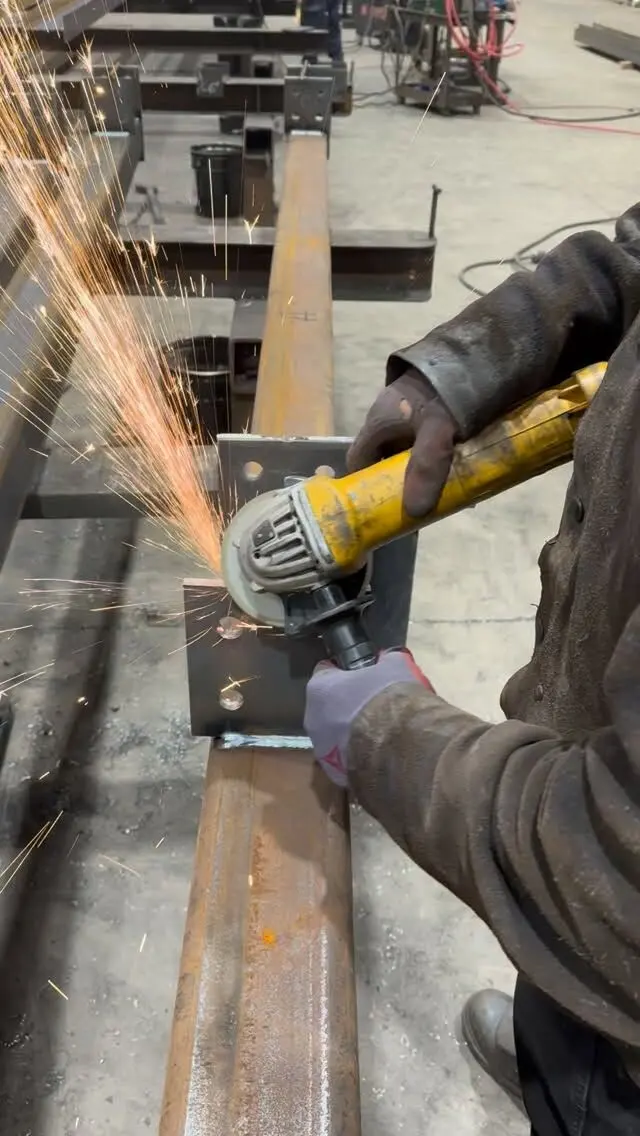
Steel railings are the strongest and most customizable of the three, but they need galvanizing or a coating to stand up outdoors. Aluminum railings are lighter and won't rust, and they usually come as manufactured systems with set designs. Glass railings keep the view open, but the glass is always held by a metal frame and has to be safety glass. All three must meet the same Ontario Building Code guard rules, so the right choice depends on where the railing goes, the look you want and how much maintenance you'll accept.
Steel vs aluminum vs glass at a glance
| Steel | Aluminum | Glass (with metal frame) | |
|---|---|---|---|
| Strength and stiffness | Highest for a given size; slim posts possible | Lighter and less stiff, so posts are larger or closer | Depends on the frame and glass thickness |
| Rust and corrosion | Rusts unless galvanized or coated | Doesn't rust; forms a protective oxide | Glass doesn't corrode; the frame follows its own metal |
| Custom design | Almost unlimited: welded to any shape, angle or curve | Mostly system profiles and fittings | Panel sizes and fixing system set the options |
| Typical supply | Custom fabricated to measurements | Manufactured system, cut and assembled | Metal frame plus glass cut and tempered to size |
| Maintenance outdoors | Inspect and touch up coating, especially at post bases | Low | Cleaning; check clamps and gaskets |
| Weight | Heaviest | Light | Heavy panels, light framing |
| Feel | Solid, minimal flex | Can feel lighter | Solid when well framed |
Steel railings
Most custom metal railings are mild steel, the ordinary low-carbon steel used for structural work. In some markets you'll see it called "MS railing". Its strengths:
- Strength in a small section. Slim flat bar pickets, square tube posts and thin top rails can still carry guard loads, which gives a lighter look than aluminum of the same strength.
- Welded to fit. Steel can be cut, bent and welded into stairs, curves, landings and odd angles. That's why stair railings, feature railings and anything that doesn't fit a standard system are usually steel.
- Easy to repair and modify. A damaged picket can be cut out and replaced, and sections can be added later.
The trade-off is corrosion. Bare mild steel rusts. Inside, a primer and paint or powder coat is enough. Outside, especially near driveways and walkways where salt is used, exterior steel is normally hot-dip galvanized, and often painted or powder coated on top. Our guide to steel railings for balconies and decks covers outdoor detailing.
Stainless steel railings resist corrosion without a coating and suit modern designs, but the material is costlier and slower to fabricate and finish than mild steel. Iron railings are a separate question: most railings sold as "wrought iron" today are mild steel made in a traditional style, sometimes with cast iron decorative parts. So "steel railing vs iron railing" is usually a question of style, not material.
Aluminum railings
Aluminum railings are typically bought as systems: extruded posts, rails and pickets with matching brackets, cut and assembled on site or in a shop.
Where aluminum works well:
- Low maintenance outdoors. Aluminum doesn't rust, and factory powder-coated systems hold up well on decks and balconies.
- Light weight. Easier to handle and install, and lighter on the structure.
- Standard runs. Long, straight deck and balcony guards are what systems are built for.
Where it's less suited:
- Custom shapes. Curves, unusual stair angles and one-off designs are limited to what the system allows.
- Stiffness. Aluminum is less stiff than steel, so posts tend to be larger or closer together to carry the same guard load.
- Contact with other metals. Aluminum in contact with steel or copper in wet conditions can corrode, so fasteners and connections have to be chosen with care.
Many aluminum systems are sold with engineering or test data for guard loads. Ask for it, and check that the configuration you're buying, including post spacing and mounting, matches what was tested.
Glass railings
A glass railing is really a metal railing with glass infill. The glass is held by posts with clamps, channels, a base shoe or point fixings, and the frame can be steel, aluminum or stainless steel.
- Code rules. Under the 2024 Ontario Building Code, glass in a guard must be laminated or tempered safety glass (or wired safety glass). In larger buildings, Supplementary Standard SB-13 sets the glass type by how close it is to the floor edge.
- Climbing. A glass panel gives no footholds, so glass is a straightforward way to meet the anti-climb rule where you want an open look.
- Handrails. On stairs, the glass is a guard, not a handrail. A graspable handrail is still needed.
- Maintenance. Glass shows water spots, pollen and fingerprints, so it needs regular cleaning.
See steel railings with glass for the systems and the glass rules in detail.
The code doesn't pick a material
Every railing that acts as a guard has to meet the same Ontario Building Code requirements, whatever it is made of: minimum height (generally 1,070 mm, or 900 mm inside a dwelling unit and on low exterior guards serving one house), openings that stop a 100 mm sphere, no climbable members between 140 mm and 900 mm above the walking surface, and the specified guard loads. Stair handrails have their own height and graspability rules. Our guide to OBC guard and handrail rules for steel railings lays them out.
In practice the material affects how easily you meet them. Steel and glass make anti-climb designs easy. Aluminum systems usually include compliant picket options, but horizontal "modern" styles in any material generally fail on a required guard.
Comparing the cost
We don't publish prices, and "steel railing vs glass railing cost" depends heavily on the design. The general pattern:
- Steel costs are driven by fabrication hours: pickets, posts, corners, stair sections and finish. Simple picket railings are economical; complex custom designs are not.
- Aluminum systems are priced by the system and length. Straight standard runs are efficient; custom angles and special colours add up.
- Glass railings combine a metal frame with safety glass, plus coordination between trades, so they usually sit above a plain picket railing in either metal.
Compare quotes for the same height, layout, mounting and finish. Our guide to what drives steel railing cost per foot explains how steel railings are priced.
Which one fits your project
| Situation | Usually the best fit |
|---|---|
| Interior stair with a custom design | Steel, or steel with glass |
| Long, straight deck guard, low maintenance priority | Aluminum system or galvanized steel |
| Balcony where the view matters | Glass with a steel or aluminum frame |
| Stair railing with landings, curves or odd angles | Steel |
| Heavy use, commercial or industrial | Galvanized steel |
| Traditional "wrought iron" look | Mild steel in a traditional style |
Getting a steel or steel and glass railing quoted
We fabricate custom steel railings, stairs, gates and ladders in our shop in Erin, with CWB certified welding and shop drawings prepared in-house, and deliver across the GTA and Ontario. If you have an aluminum or glass quote in hand, send it along with your measurements and we'll price a steel option for the same layout.
Request a railing quote with photos, measurements or drawings. We can prime or galvanize your railing to suit the job, and installation is by your installer or contractor. See our steel products for the miscellaneous steel we make.
Frequently asked questions
Is a steel railing better than aluminum?
Steel is stronger and stiffer for its size and can be welded into almost any custom design, but outdoors it must be galvanized or coated to prevent rust. Aluminum is lighter and doesn't rust, and it usually comes as a manufactured system with set profiles and colours.
Is a steel railing the same as an iron railing?
Usually, yes. Most railings sold as wrought iron today are made from mild steel, sometimes with cast iron decorative parts. Genuine wrought iron is now made only in small quantities, mostly for restoration work.
What does MS railing mean?
MS stands for mild steel, the ordinary low-carbon structural steel most custom railings are made from. It's strong, easy to cut and weld, and needs a coating or galvanizing to resist rust. SS railing means stainless steel.
Is a glass railing more expensive than a steel railing?
Generally a glass railing involves more cost than a plain steel picket railing, because it needs safety glass, a supporting frame of steel, aluminum or stainless, and coordination between the metal fabricator and the glazier. The exact difference depends on the system and the number of panels.
Which railing material is best for an Ontario deck?
All three work if the guard meets the Ontario Building Code. Aluminum suits low-maintenance deck systems, galvanized steel suits custom designs and heavy use, and glass suits decks where the view matters. Whatever you choose, the posts and their attachment carry the load.