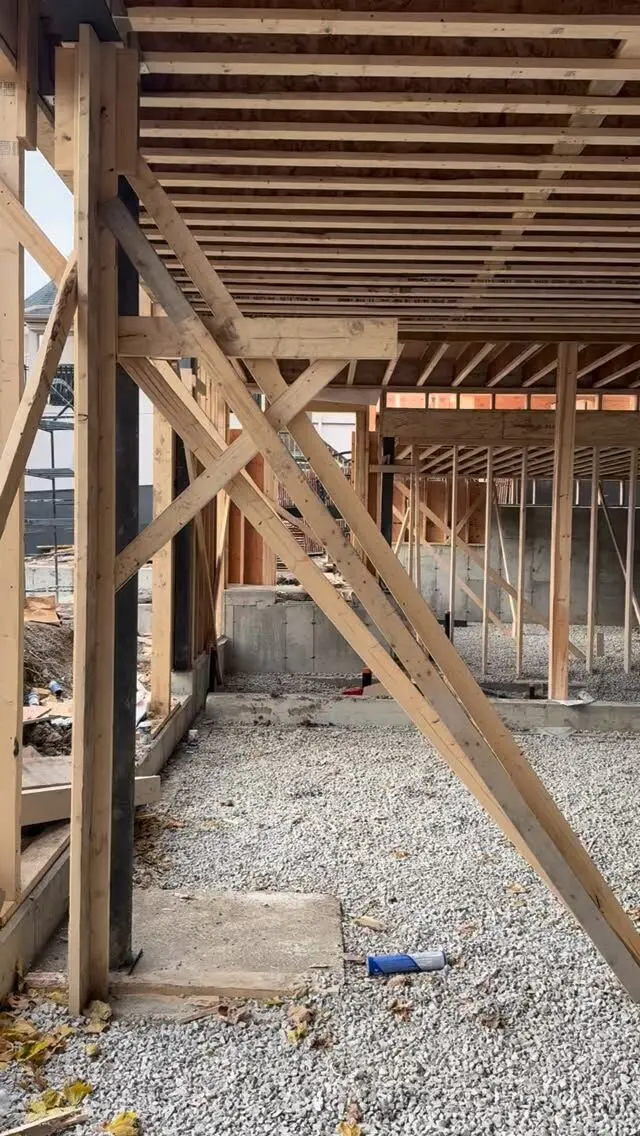
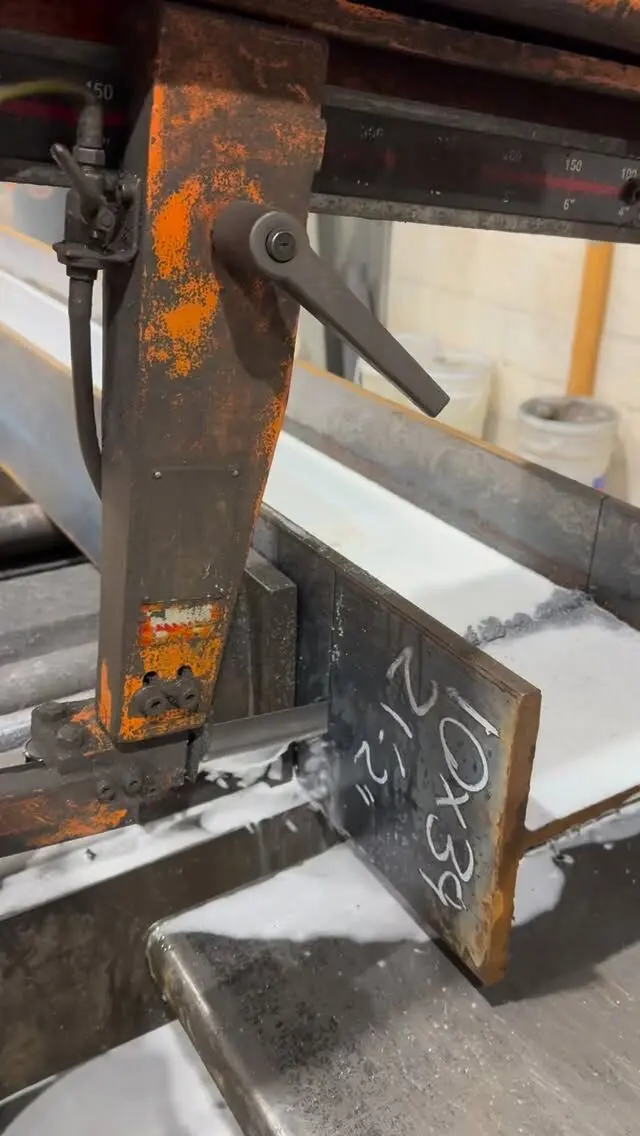
There's no single answer to whether a steel beam or an LVL is cheaper installed, because the beam is usually a small part of the cost. On short spans with plenty of depth available, LVL is often the cheaper route. On long spans, heavy loads or jobs where depth is tight, a steel beam can be cheaper overall because it removes posts and footings, avoids a dropped ceiling, or makes a flush beam possible. The way to know is to price both on the same opening.
We don't publish prices, because they'd be wrong for most jobs. Instead, here's how the comparison actually works, and how to get two quotes you can compare fairly.
Beam price vs installed cost
When people search "steel beam vs LVL cost," they're usually comparing the price of the beam. That's the wrong comparison, and it's the reason steel often looks expensive on paper. An installed beam job includes:
- Engineering and permit
- Temporary shoring while the old wall or beam comes out
- The beam and its fabrication or assembly
- Posts and footings at each support
- Installation labour and equipment, including getting the beam into the house
- Joist connections, hangers or nailers
- Finishing: drywall, bulkheads, flooring and paint
Change the beam material and several of those lines move, not just the beam line. Our breakdown of the cost to install a steel beam in a basement goes through each component in detail.
Where LVL usually comes out ahead
LVL (laminated veneer lumber) is an engineered wood product made from thin veneers glued together. It tends to be the lower-cost installed option when:
- The span is modest and the loads are light, such as a single floor above.
- There's depth to spare, so a deeper wood beam doesn't cost headroom or force a bulkhead.
- Framers are already on site. LVL plies are cut, carried and assembled with ordinary carpentry tools, and connections are nails, screws, bolts and hangers.
- Access is tight. Individual plies are light enough to carry down a narrow stair one at a time and fasten together in place.
- Posts and footings already exist where the LVL needs them.
Where steel can be cheaper installed
Steel is stronger and stiffer for its depth, so it can span further on fewer supports or carry the same load in a shallower section. That becomes a cost advantage when:
- It saves a post and footing. Every intermediate post usually needs a footing, which means cutting the slab, excavating, an inspection, concrete, curing and patching. Our post on lally column footing requirements explains why. A steel beam that spans the whole room on two supports can remove that work entirely.
- Headroom is tight. A shallower steel beam can avoid a bulkhead or a lowered ceiling, or let the beam go in flush with the joists where an LVL of the same capacity would hang below.
- The load is heavy. Two floors, a bearing wall or a point load above can push an LVL to multiple plies and a large depth, while a steel section stays compact.
- The span is long. Opening up a whole main floor or basement is where steel is most often specified.
Steel has its own cost drivers. It's heavy, so a long beam may need more hands, lifting equipment or a designed splice to fit through the basement stair or a window. It's fabricated to measurements, so it needs an accurate field measure before it's made. And it usually comes with a wood nailer bolted to the top flange for fastening the joists or subfloor. For how the steel itself is priced, see steel beam prices in Canada.
Engineering, permits and code paths
Both materials need the beam sized correctly, and both usually need a permit when a beam is added or replaced. The code paths are different:
- Steel beams have Part 9 span tables in the 2024 Ontario Building Code (Table 9.23.4.3. and Tables 9.23.4.3.-A to -J), but most renovation beams carry point loads or fall outside the tables and are engineered. See our steel beam span tables guide.
- Built-up lumber and glulam floor beams have Part 9 span tables too (Tables 9.23.4.2.-H to -K).
- LVL is not in the Part 9 span tables. It is a proprietary product sized from the manufacturer's design data and software, and the sizing is often done by the designer or the lumber supplier.
Either way, a wall removal or new beam line needs someone to trace the loads to the foundation. That cost is similar for both materials; what differs is how many posts and footings the design ends up with.
Flush vs drop beams
Many "steel vs LVL" decisions are really decisions about whether the beam goes flush (in the joist depth, with joists hung off its sides) or dropped (below the joists, with joists sitting on top).
- A drop beam is simpler and usually cheaper to install in either material, but it leaves a beam below the ceiling.
- A flush beam gives a flat ceiling, but every joist has to be cut and hung, which adds labour. Because steel is shallower for the same capacity, it's often the material that makes a flush beam possible at all where an LVL would still hang below the joists.
If the plan is a flat ceiling across a long opening, price steel. If a dropped beam is fine and the span is modest, LVL is likely competitive.
Steel beam vs LVL cost comparison at a glance
| Cost factor | Steel beam | LVL |
|---|---|---|
| Material per unit length | Usually higher | Usually lower |
| Depth for the same load | Shallower | Deeper |
| Posts and footings on long spans | Often fewer | Often more |
| Getting it into the house | Heavy; may need equipment or a splice | Light plies, assembled in place |
| Fabrication | Cut, drilled, plates and nailer in the shop | Cut and fastened on site |
| Flush beam on a long span | Often possible | May not fit in joist depth |
| Field changes | Hard; measure first | Easy to trim on site |
| Movement over time | Does not shrink | Minimal shrinkage |
Fire protection in houses is a separate question for any exposed beam; see do steel beams in houses need fireproofing. For strength, span and depth compared side by side, see steel beam vs LVL: strength, span and depth.
How to get two quotes you can compare
To see which is cheaper installed for your house, have both options priced on the same scope:
- Get the designer to size both, or at least confirm whether an LVL can do the job at the depth you want and with the post locations you want.
- Price the whole job, not the beam, including posts, footings, shoring, installation, joist connections and finishing.
- Check headroom and finish. A cheaper beam that leaves a bulkhead you didn't want isn't the same result.
- Ask about access. How the beam gets into the house can change the steel price more than the steel does.
- Compare like with like: same span, same number of posts, same ceiling outcome.
For a wall removal upstairs, our load-bearing wall removal cost guide covers the rest of the job.
Getting the steel side priced
We fabricate steel beams cut to length with nailer holes, cap plates and connections, along with posts and plates, and we supply and install basement beams and posts across the GTA and Ontario. Engineering services are available for projects that need them. Send us your drawings or measurements and we'll price the steel option so you can compare, or see our services.
Frequently asked questions
Is an LVL beam cheaper than a steel beam?
For the beam alone on a short, lightly loaded span with headroom to spare, LVL is often the lower-cost material. Installed cost is a different question: on longer spans, heavy loads or tight depth limits, steel can remove posts and footings or avoid lowering a ceiling, and that can make it cheaper overall.
Is a steel beam stronger than LVL?
Yes, for the same depth a steel beam carries much more load and deflects less, so it can span further or be shallower. That strength is what can make steel the cheaper installed option when it saves posts, footings or headroom.
Steel beam vs wood beam cost: what matters most?
What happens around the beam: how many posts and footings it needs, whether it goes in flush or dropped, how it gets into the house, how much finished space is opened up, and the engineering and permit. Compare complete installed quotes for the same opening, not beam prices.
Is glulam cheaper than a steel beam?
It depends on the span and load, the same as LVL. Glulam floor beams have span tables in Part 9 of the Ontario Building Code (Table 9.23.4.2.-K), and they are larger than a steel beam for the same span. Price both on the same design to compare.